Tag: Advent

  • Notes and Useful Applications for Romans 15:4–13 from Das Weimarische Bibelwerk (1877)

    The following is my translation of the notes and useful applications of the Epistle Reading for the Second Sunday of Advent (Populus Zion), Romans 15:4–13, as they are found in Das Weimarische Bibelwerk (1877). Square brackets indicate my own notes and additions. For the useful applications, I recommend the reader see this very helpful article by Dr. Benjamin T. G. Mayes.

    I. A proof from the example of Christ. (v. 1–13)

    Annotated Text

    4. Now whatever was written * beforehand (in the Psalms of David and other books of Holy Scripture concerning Christ and other articles of our Christian faith) was written for our instruction, that we through the patience and comfort of the Scripture (through patience which grows out of the comforting sayings of Scripture) would have (no one therefore may think that what is written about Christ does not concern us, but rather that we also are hereby directed to Christian patience with the weak) hope (of the redemption from all crosses and of eternal life).

    * Romans 4:23–24; 1 Corinthians 10:11 (2 Timothy 3:16)

    5. Now may the God of patience and comfort (who imparts patience and comfort to His own in the power of the Holy Spirit through His Word) grant you that * you be of a single mind among one another1 (and do not stir up quarrels among one another on account of differing uses of middle things, but rather bear with one another and yield to one another) according to Jesus Christ (according to Christ’s teaching and example);

    * Philippians 3:16ff. (Romans 12:16; 1 Corinthians 1:10; Psalm 133:1)

    Greek: “in the same way, be minded among one another and toward one another” [τὸ αὐτὸ φρονεῖν ἐν ἀλλήλοις]

    6. that you praise and single-mindedly with one mouth (and heart) praise the God and Father (God, the Lord, who is the Father) of our Lord Jesus Christ (to whose praise and honor all your doings ought to be directed).

    (Acts 1:14, 4:24)

    7. Therefore, receive one another among yourselves, just as1 Christ has received you (and us all) to God’s praise (that we, for this our redemption which has happened through Christ, praise God the Lord here temporally and there eternally and thank Him and also show much patience to our neighbor Christians to the same end).

    (Romans 14:1ff.)

    1 Greek: “also” [καὶ]

    8. Now I say (Luther: “This is the summary of summaries of this epistle: Both Jews and Gentiles shall be saved, etc.”), that Jesus Christ became * a servant of the circumcision (Luther: “Servant, that is, apostle, preacher, and messenger, sent personally to the Jews and not to the Gentiles), for the sake of the truth of God, to confirm (to fulfill) the promises made to the fathers. (Christ has deemed the Jews worthy in a high way, those to whom He was especially promised, that He, in His own person, preached the Gospel to them; therefore, the Gentiles ought not despise them on account of the fact that they still observe some things from the Levitical Law.)

    * Matthew 15:24

    † Acts 3:25

    9. But that the Gentiles praise God for the sake of * His mercy (which they have obtained from God through Christ; therefore, because Christ also received the Gentiles into grace and has had the Gospel preached to them through His apostles, the Jews ought not despise them as strangers of the testaments of the promise; on the other hand, those converts from the Gentiles ought to patiently endure that weakness of the [Jews], when they cannot resign themselves at once to the freedom of Christians from the Mosaic  ordinances), as it stands written: “Therefore, I (Christ) will praise You among the Gentiles, and sing to Your name (I will have the Gospel preached also among the Gentiles and thereby work in their hearts that they may rightly know You, My heavenly Father, and may also praise and extol Your name).”

    * Romans 11:30

    † Psalm 18:50; 2 Samuel 22:50 (Ephesians 2:16)

    10. And once more * He says (Christ through Moses), “Rejoice you Gentiles with His people (as fellow-partakers of His people).

    * Deuteronomy 32:43; Psalm 67:5

    11. And once more (through David), * “Praise the Lord, all Gentiles, and praise Him all peoples.”

    * Psalm 117:1

    12. And once more * says Isaiah, “There shall be the † Root of Jesse (Christ, in the time of the New Testament, will spring forth from the root of Jesse, that is, from the lineage of David, the Son of Jesse), and the one who will arise to rule (in His Kingdom of grace through His Word and Spirit) over the Gentiles (who will stand as “a banner for the peoples,” as the words in the prophet read, [Isaiah 11:10]); in Him will the Gentiles hope (and seek Him, as the prophet says).

    * Isaiah 11:10

     Revelation 5:5 (22:16)

    13. Now the God of hope (the one who works hope and all Christian virtues in believers) fill you with all (spiritual) * joy and peace (the peace which springs forth from peace with God) in faith, that you have1 (receive in your hearts) the full hope (of eternal salvation) through the power of the Holy Spirit.

    * Romans 14:17

    1 Greek: “overflowingly,” that is, “that you do still more than I say to you in the hope, etc.”

    Useful Applications

    I. DOCTRINE: That the Holy Divine Scripture was given to us so that we might have patience, comfort, and the hope of eternal life among the tribulations of this life through its teaching and instruction. (v. 4)

  • Notes and Useful Applications for Luke 21:25–33 from Das Weimarische Bibelwerk (1877)

    The following is my translation of the notes and useful applications of the Holy Gospel for the Second Sunday of Advent (Populus Zion), Luke 21:25–33, as they are found in Das Weimarische Bibelwerk (1877). Square brackets indicate my own notes and additions. For the useful applications, I recommend the reader see this very helpful article by Dr. Benjamin T. G. Mayes.

    III. A prophecy concerning the end of the world, in which signs are recounted in like manner. (v. 25–38)

    Annotated Text

    25. “And * there will be seen signs in the sun, moon, and stars (for the sun and the moon will lose their radiance and the stars will fall from heaven); and there will be anxiety among the people1 (especially the godless), and they will be timid (so that they do not know what to do); † and the sea and the waves will roar (The waters will burst forth, destroy land and people, and otherwise roar and rage in terrible unheard ways).

    * Isaiah 31:10; Matthew 24:29

    1 Greek: “the peoples” [ἐθνῶν]

    † Psalm 46:4 (Mark 13:24; Joel 3:4; Revelation 6:12)

    26. And men will be * languishing from fear and from expectation of the things which are shall come upon the earth (on account of the terrifying signs; therefore, the people on earth will have to wait for nothing other than the Last Day and the end of the world); for even the powers of the heavens will be shaken (the heavens with their stars will not be as powerful as before for warmth, fruitfulness, and for hidden workings).

    * Isaiah 64:7; Ezekiel 24:23

    27. And * then (immediately after these preceding signs) they (the people on earth) will see the Son of Man (Christ in His assumed humanity) coming in the clouds with great power and glory (He will allow His divine omnipotence and glory communicated to Him according to His human nature to be seen and heard everywhere).

    * Daniel 7:13 (Matthew 26:64)

    28. But when you see these things begin to happen (do not wait only for the last moment, but rather when you see beforehand these things that are preached come into fulfillment more and more), so (you believers) look up (be renewed in your courage), and raise your heads (and hearts with joyful confidence and heartfelt longing), * for your redemption (indeed more and more) draws near (because it is present that through the Last Day you shall be completely delivered from all evil, Romans 8:23).”

    * Romans 8:21, 23

    29. And He (Christ) spoke to them a parable (how to recognize the presence of the Last Day), * “Look at the fig tree and all the trees.

    * Matthew 24:32 (Mark 13:28)

    30. When they are already budding, you see in them and take note that summer is now near.

    31. So also you (believers and pious people), when you see all these things happening, then know that the Kingdom of God is near (do not be all to terrified at the signs previously recounted, but rather assure and comfort yourselves that you shall soon be relocated into the kingdom of eternal joy and glory and shall have your joyful everlasting summer there).

    32. Truly, * I say to you, this generation (of the Jews) will not pass away (not entirely be eradicated, but rather wander about, scattered here and there), until all this happens (until the Last Day shall come upon the previously mentioned signs).

    * Matthew 24:34ff.

    33. * Heaven and earth will pass away, but My words † will not pass away.

    * Luke 16:17; Psalm 102:27; Isaiah 51:6; Matthew 5:18

    † Isaiah 40:8

    34. But guard yourselves, that your hearts are not weighed down (that they cannot lift themselves to God on high with devotion in prayer, faith, hope, etc.) with * gluttony and drunkenness, and with cares of sustenance, and the day (the day of judgment) comes upon you quickly.

    * Romans 13:13; Galatians 5:21; Ephesians 5:18 (1 Thessalonians 5:5ff.; 1 Peter 4:7ff.)

    35. For * it will come as a snare upon all who dwell on earth (just as a bird-catcher casts the net unexpectedly and swiftly over the birds when they hop about on the ground, pick up the grains, and fear no evil, so also when the godless and the earthly minded children of the world are secure, gorging and getting and drunk, and indulging in the lusts of this world, they will be suddenly and unexpectedly trapped and startled by the Last Day).

    * 1 Thessalonians 5:3 (2 Peter 3:10)

    36. So now you therefore be vigorous (vigilant) at all times (flee security and live always in Christian preparedness), and pray, that you may be worthy (deemed worthy by God by grace), to escape all these things that (before and on the Last Day, in a terrible manner, especially with swift abruptness, v. 35) shall happen, and to stand1 before the Son of Man (that you may appear before the judgment seat of Christ with a joyful countenance and a good conscience and not be rejected by Him with the godless, Psalm 1:5; Wisdom 5:1).”

    (Matthew 24:42, 25:13; Mark 13:34ff; Revelation 3:2, 16:15)

    1 * “to persist,” see Psalm 1:5

    Useful Applications

    III. WARNING: That one ought to expect the Last Day at all times, and that we ought to guard ourselves against gluttony, drunkenness, and the cares of sustenance (or avarice) so that the Last Day may not overtake us while we are unprepared, for by these things the hearts of men are weighed down and many damnable sins are committed. (v. 34)

  • Notes and Useful Applications for Matthew 3:1–6 from Das Weimarische Bibelwerk (1877)

    The following is my translation of the notes and useful applications of the Holy Gospel for Wednesday of Ad Te Levavi, Matthew 3:1–6, as they are found in Das Weimarische Bibelwerk (1877). Square brackets indicate my own notes and additions. For the useful applications, I recommend the reader see this very helpful article by Dr. Benjamin T. G. Mayes.

    John, the Preacher in the Wilderness, by Julius Schnorr von Carolsfeld

    I. Concerning the person of John the Baptist, as to what constituted his office, doctrine, food, and clothing. (v. 1–4), and II. Concerning the great influx of the people to John, and how he on such occasion preached against the hypocrisy of the Jews. (v. 5–12)

    Annotated Text

    1. At that time1 (when Christ was almost thirty years old, in the fifteenth year of the reign of Tiberius, when Pilate was the Roman governor, and Annas and Caiaphas were high priests, Luke 3:1–2, but the Lord Jesus still kept Himself at Nazareth) * came (appeared or emerged) John (a son of the priest Zachariah, who had begotten him with his old housewife Elizabeth, Luke 1:24, 57) the Baptist (who is called thus on account of the baptism which he carried out at God’s command at the beginning of the New Testament) and he preached (called out with a loud voice) in the wilderness of the Judean land (in a place of the land in Judea, located by the Jordan, not far from Jericho, Luke 3:3; a place called “the plain of the wilderness,” 2 Samuel 17:16, 22, because there was much forest and mountains there and thus it was inhabited less than other places, although several cities were located in that same place, in which Zachariah, John the Baptist’s father, dwelt, Luke 1:39–40. Luther: “This ought to be a certain sign that the Messiah was coming when they heard one preaching not in the temple at Jerusalem, nor in the [Pharisaical] schools, but rather in the wilderness, who preached in this manner: ‘The Lord is coming,’ as John had done.”).2

    1 Greek: “Now” [δὲ]

    * Mark 1:4; Luke 3:3

    2 † This wilderness was a region of land in the Jewish mountains, Luke 1:39, 80, where the Word of the Lord first came to John, Luke 3:2. From that same region he went forth until he came to the Jordan.

    2. And he said, * “Repent (turn yourselves from your godless way of life); the Kingdom of Heaven (that is, the time of grace, when God Himself appears in Christ on earth and draws men away from trust in their own righteousness, in Levitical external worship, and fleshly thinking, and, on the other hand will establish a spiritual Kingdom through faith in the hearts of men) has come near (The prophecies of the prophets concerning the Kingdom of the Messiah are now fulfilled; for He has appeared and will soon enter His office with the public preaching of the Gospel, in which He will offer the grace of God, the forgiveness of sins, and eternal salvation to all men and will impart it to the who truly repent and believe, and will also win such treasures and benefits for them through His obedience, suffering, and death).

    * Matthew 4:17 (Mark 1:15)

    3. And1 he (John the Baptist) is the one of whom the Prophet Isaiah * had spoken, saying: “A voice of a preacher (a voice calling) in the wilderness (saying thus): ‘Prepare for the Lord (the coming Messiah, who is our righteousness, Jeremiah 23:6) the way (clear out of the way the filth of errors and the great logs of misdeeds through true knowledge of sins and heartfelt contrition over them; adorn the way with the fervent longing for the grace of God  with true faith in the promised and now appeared Messiah with the earnest intent of amendment and with all kinds of Christian virtues; just as one clears all hindrances and filth out of the way when a king or a prince intends to make his entrance and adorns the way with tapestries, grass, and trees [cf. Matthew 21:8]), and make His paths straight2 (so that the heart may not be lifted up through spiritual pride nor be made crooked and uneven through hypocrisy, because without true repentance, His gospel cannot be received and grasped and hearts in a fruitful manner).

    1 Greek: “For he” [or, “for in this way,” οὗτος γάρ]

    * Isaiah 40:3 (Mark 1:3; Luke 3:4; John 1:23)

    2 Greek: “footpaths” (where He wants to teach, preach, walk, and be received)

    4. Now John had a * garment of camel’s hair (a meagre, hairy,  rough garment prepared from coarse camel’s hair, in which form the prophet Elijah was also clothed in the Old Testament, 2 Kings 1:8, for “He will go before Him [the Lord] in the spirit and power of Elijah,” Luke 1:17, and was the true Elijah who was to come, Malachi 4:5 and Matthew 11:14; thus [John] also wanted by his clothing to be compared to [Elijah]) and a leather girdle around his loins (the like of which Elijah also wore); his food was locusts (which was a different kind of locust than those we have, and which the common poor people in the eastern lands were accustomed to using for food, both fresh and dried in smoke; the Jews also were allowed to eat them, Leviticus 11:22, yet, it was a humble, disdained food) and wild honey (honey of wild bees, which was not as good and sweet as other honey;1 because John was a preacher of repentance, so he also wanted to lead a hard and strict life, both in his food and also in his clothing).

    * 2 Kings 1:8; Mark 1:6 (Matthew 11:8, 18; 1 Samuel 14:27)

    1 † Some understand here the flowing sap of date and fig trees, which is also called honey among the Hebrews and was found in the region of Jericho as well as near the Jordan. But it is better that one remains with the more common meaning of “wild honey.”

    5. Then went out to him the city (the inhabitants of the city) of Jerusalem and the entire Jewish land all lands (the people from all the cities and villages of the Jewish land and of the surrounding neighboring regions, such as Galilee, Perea, Trachonitis, etc.) at the Jordan.

    (Luke 3:7)

    6. And they allowed themselves to be baptized by him in the Jordan and they confessed their sins (They acknowledged their guilt before God, and confessed publicly that they were poor sinners and then humbly asked God for forgiveness; thereafter, John admonished them that they ought to believe in Christ, the Messiah and Savior of the world, who had now appeared, and afterwards baptized them for the forgiveness of sins by God’s command, Luke 3:3).

    Useful Applications

    I. CORRECTION: That the foremost purpose of all Church teachers in their office ought to be to teach concerning repentance as did John. (v. 2).

    [There are no useful applications listed for verses 5–6.]

  • Notes and Useful Applications for James 5:7–10 from Das Weimarische Bibelwerk (1877)

    The following is my translation of the notes and useful applications of the Epistle Reading for Wednesday of Ad Te Levavi, James 5:7–10, as they are found in Das Weimarische Bibelwerk (1877). Square brackets indicate my own notes and additions. For the useful applications, I recommend the reader see this very helpful article by Dr. Benjamin T. G. Mayes.

    II. A command concerning patience and comfort in tribulation. (v. 7–11)

    Annotated Text

    7. So now be * patient, beloved brothers (you who must allow yourselves to be frightened and oppressed so miserably by the godless rich, and also do not let yourselves be embittered by it), until the coming of the Lord (until Christ appears on the Last Day to hold judgment, who will not only deliver you from such tribulation, but also will reciprocate tribulation upon those who have laid affliction upon you, 2 Thessalonians 1:6). See how a farmer waits for the beautiful fruit of the earth, and is patient over it, until it receives the morning and evening rain (until God gives a fruitful rain, both for sowing and also for harvest time, by which the land is watered and is made rich, its furrows are soaks, its plowed field is moistened, and its growth is blessed, Psalm 65:10–11).

    * Luke 21:19; Hebrews 10:36 (James 1:4; Deuteronomy 11:14)

    8. You also be patient (do not allow yourselves to be moved to impatience by the oppression of the godless rich), and strengthen your hearts (by faithful trust and by the certain hope of the promised redemption and future blessèdness); for the coming of the Lord (Christ for judgment) is near (for the time between the first coming of the Son of God in the flesh and between His second coming for judgment is considered a short time, not only reckoned against eternity, but also against the time of the world which has already passed).

    (1 Corinthians 10:11; Philippians 4:5; Revelation 22:12)

    9. Do not groan against one another (out of impatience, hatred, anger, and vindictiveness), beloved brothers, so that you are not (by impatience, self-vengeance, and loveless sighing and wishing) condemned (for strife, envy, anger, hatred, and vindictiveness belong among the works of the flesh, and those who do these things will not inherit the Kingdom of God, Galatians 5:20–21). Behold, * the Judge is1 at the door (the coming of the Lord Christ, the appointed universal Judge, is so near as if He were already standing at the door).

    * Matthew 24:33 (Colossians 3:13)

    1 Greek: “standing” [ἕστηκεν]

    10. Take, my beloved brothers, * as an example the suffering and patience of the prophets, who had spoken in the name of the Lord (comfort yourselves in your suffering with the example of your teachers, who preached the Gospel of Christ to you and endured much hardship on account of it).

    * Matthew 5:12 (Romans 15:4)

    11. Behold, we praise them as blessèd (the saints of the Old Testament) who have endured1 (who endured much vileness in this world and are now redeemed out of them, and have been exalted to eternal glory). You have heard of the * patience of Job (it is known to you from his history), and the end of the Lord2 (Christ) you have seen (you on your part have seen how Christ endured all adversity, even death itself, with great patience and entered His glory through His suffering, Luke 24:26); for the † Lord is compassionate (of great compassion) and is merciful (He allows the need of His people to go to His heart, and finally redeems them out of all tribulation).

    1 Greek: “who endure steadfastly” [ὑπομείναντας]

    * Job 1:21–22

    2 † Others interpret this as referring to the end of the suffering sent by God, Job 42:10ff.

    † Psalm 103:8 (Matthew 5:11; Numbers 14:18)

    Useful Applications

    II. CORRECTION: To patience in the time of suffering according to the example of the holy prophets, and especially the man of God, Job. (v. 10–11)

  • Notes and Useful Applications for Matthew 21:1–11 from Das Weimarische Bibelwerk (1877)

    The following is my translation of the notes and useful applications of the Holy Gospel of the First Sunday of Advent (Ad Te Levavi), Matthew 21:1–11, as they are found in Das Weimarische Bibelwerk (1877). Square brackets indicate my own notes and additions. For the useful applications, I recommend the reader see this very helpful article by Dr. Benjamin T. G. Mayes.

    I. The advent of Christ to Jerusalem. (v. 1–11)

    Annotated Text

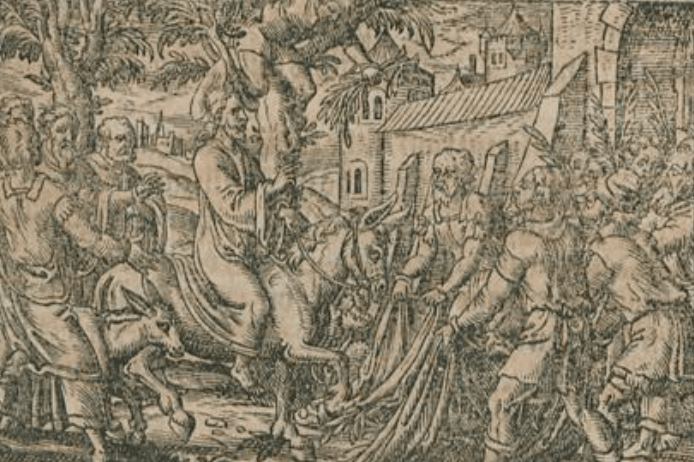
    1. When * they (Christ and His disciples together with the people that followed Him) now drew near to Jerusalem, and came to (opposite of) Bethphage (and Bethany, Luke 19:29) to the Mount of Olives, 1 Jesus sent two disciples,

    * Mark 11:1; John 12:12

    1 Greek: “And when” [Καὶ ὅτε]

    2. and He said to them, “Go into the town which lies before you (into the market which lies opposite you, Luke 19:30) and immediately (when you come into it) you will find a donkey tied up and a colt with it (also bound, on which no man has yet sat, Luke 19:30); loose it and bring it to Me. (For what purpose the Lord Christ intended to use this beast of burden He had not yet indicated to the disciples; but He was intent to hold His royal entry into the city of Jerusalem previously proclaimed by the Prophet.)

    3. And if someone should say something to you (and ask: ‘Why are you doing this?’ Mark 11:3; ‘Why do you loose the donkey and the colt?’ Luke 9:31), then say: ‘The Lord has need of it (for His service); and immediately he will allow it (to follow) you (and send them).

    4. Now all this happened that it would be fulfilled what had been said through the prophet (Zechariah), when he said:

    5. “Say * to the daughter (the inhabitants) of Zion (of the city of Jerusalem, whose highest part was built upon Mount Zion; however, thereby is understood the Israelite Church): ‘Behold, your (heavenly soul-) King comes to you (that He might have mercy on you and help you; thus, be for your good before others) meek (humble and lowly), and riding upon a donkey and upon a colt, the load-bearing donkey.” (Christ first rode upon the donkey and afterwards He sat Himself on the colt upon which He rode into the city. By the donkey is signified the Jews, the burden-bearing people; by the untamed colt, the Gentiles.)

    * Zechariah 9:9ff.; John 12:15

    † Psalm 24:8 (Isaiah 62:11)

    6. The disciples went out (from willing obedience, and they found it as He had said; for they found the colt tied at the door, outside at the crossroads, and they loosed it. But as they were loosing the colt, certain ones who were standing there said to them, “What are you doing, that you are loosing the colt?” Mark 11:4–5. And its lords said to them, “Why are you loosing the colt?” Luke 19:33. But they said to them as Jesus had commanded them, “The Lord has need of it,” and they allowed it, Mark 11:6.) and (those who were sent) did, as Jesus had commanded them.

    7. And they brought the donkey and colt (to Jesus), and laid their * garments thereupon (so that He might ride all the more gently) and set Him thereupon (They cast their garments upon the colt, and He sat upon it, Mark 11:7. But such, what had been prophesied by Zechariah and what otherwise happened here, His disciples did not understood beforehand, but when Jesus was glorified, then they remembered that such has been written concerning Him and that they had done such things to Him, John 12:16).

    * 2 Kings 9:13; Mark 11:7–8

    8. Now many people1 spread their garments on the way (Such they did out of reverence toward this new King, as the like happened to Jehu, 2 Kings 9:13.); others2 cut down branches (green boughs) from the trees and strew them on the way (to adorn Him, to bear witness to their joy, and to confess Christ as a peace-rich and victory-rich king. And many people who had come to the feast, when they heard that Jesus had come to Jerusalem, they took palm branches and went out to meet Him, John 12:12–13. And as He came near and descended the Mount of Olives, the whole heap of His disciples began to praise God joyfully with a loud voice on account of all the deeds they had seen, Luke 19:37.).

    (1 Maccabees 13:51)

    1 Greek: “most of the people” (who partly came along from Jericho, Matthew 20:29, partly  had already come to Jerusalem for the feast and who went out to meet Him out of amazement concerning the raising of Lazarus).

    2 Greek: “but” [δὲ]

    9. But the (remaining common) people, who went before and followed after, cried out and said, “Hosanna (Luther: “In German, ‘Hosanna’ means ‘Ah, help!’ or ‘Ah, give good fortune and salvation!’—that is what we wish for.”) to the Son of David (to this new King, born of the lineage of David. The Jews had taught their children that when the Messiah would someday present Himself, they should receive Him with these words of the kingly prophet David; thus, because they heard that Jesus of Nazareth wanted to have His entry as the promised Messiah and the King of His Church, they had received Him in such a form)!1 Blessèd is He who comes (as a King) in the name of the Lord (sent by God to His people, that He should be a King of Israel, John 12:13; “Blessed be the kingdom of our father David!” Mark 11:10.)! Hosanna in the highest! (You Son of David who are in the highest, that is, a heavenly King and true God, help us. “Peace be in heaven and glory in the highest!” Luke 19:38. And some of the Pharisees in the crowd said to Him, “Master, rebuke Your disciples.” But He answered and said to them, “I say to you, if these should be silent, then the stones would cry out,” Luke 19:39–40.)

    (Matthew 23:39)

    1 † Ordinarily, this formula from Psalm 118:25 was used at the Feast of Tabernacles. But the Jews also spoke it at other times on joyful occasions. See 1 Maccabees 13:51; 2 Maccabees 10:6; etc.

    10. And when He had entered into Jerusalem, the entire city was stirred up (frightened and became distressed) and said (all the inhabitants of that city were frightened and said), “Who is this (who comes riding into the city with such a multitude of people and to whom one wishes good fortune as to a king)?”

    11. But the People said, “This is the (famous) Jesus, * the prophet from Nazareth (who was conceived and raised up in Nazareth, Matthew 2:23; Luke 2:51) of Galilee (which city of Nazareth lies in Galilee. But the Pharisees said among one another, “You see that you are achieving nothing. Behold, all the world is running after Him,” John 12:19.).

    * Luke 7:16; John 1:45

    Useful Applications

    I. DOCTRINE: That all things which happened at the time of the revelation of Christ in His received humanity were preached beforehand by all the prophets of the Old Testament, shown here by the citation of the prophet Zechariah concerning the entry of Christ into Jerusalem upon a donkey and a colt. (v. 4–5)

  • Notes and Useful Applications for Romans 13:11–14 from Das Weimarische Bibelwerk (1877)

    The following is my translation of the notes and useful applications of the Epistle Reading for the First Sunday of Advent (Ad Te Levavi), Romans 13:11–14, as they are found in Das Weimarische Bibelwerk (1877). Square brackets indicate my own notes and additions. For the useful applications, I recommend the reader see this very helpful article by Dr. Benjamin T. G. Mayes.

    III. An admonition in general to holiness and innocence of life. (v. 11–14)

    Annotated Text

    11. And because we know such, namely, the time, that is now the our to stand up (to awake) from * sleep (the sleep of sin and fleshly security, as we ought to all the more be diligent in love toward the neighbor and other Christian virtues); since † our salvation is now nearer (after we have fully come to know Christ from His Gospel and are now rescued from the terrible darkness of ignorance and of an impious life) than when we believed1 (when we first began to grasp faith from the Gospel);

    * Ephesians 5:14; 1 Thessalonians 5:6–7

    † 2 Corinthians 6:2; Hebrews 6:9

    1 Greek: “And this (let us do all the more diligently), as those who know well the present time (namely) that it is the hour when we already ought to have risen from sleep, since salvation (the blessèd use of the divine means of grace) is now nearer to us than when we (first) believed.” (The light of the Gospel breaks through more and more.)

    12. The * night is (as of now) passed by (the time of ignorance, when you did not yet know Christ, the true light, but rather were stuck in the darkness of unbelief, idolatry, and other terrible sins, has gone away), but the day (of salvation, which is the bright revelation of the Gospel, and the light of the saving knowledge of Christ) has come;1 so  let us2 cast off the works of darkness (the gross sins in which to which those are inclined who still are stuck in the darkness of ignorance, error, and idolatry, to which also the prince who rules in the darkness of this world drives men, Ephesians 6:12, which sins are committed in darkness and finally plunge into eternal darkness), and put on the armor of light (the Christian virtues which are the beautiful garment of the day that adorns a converted man, with which one can also strive against the devil and the evil lusts of the flesh).

    * 1 John 2:8

    † Ephesians 5:11 (1 Thessalonians 5:5; Colossians 3:8; John 3:21; Romans 6:13)

    1 Greek: “The night (of the former corruption among Jews and Gentiles, etc.) is far spent (so that it will now soon come to its end), but that day (the public knowledge of God also among the Gentiles) has drawn near.”

    2 Greek: “now”[δὲ] (from this cause, see Romans 12:1)

    13. Let us walk honorably (in discipline and respectability, as is befitting) as in the day, * not in gluttony1 and drunkenness (for those who are drunk, are drunk at night,” 1 Thessalonians 5:7), not in bed chambers (lustfulness) and unchastity (bold, shameless living), not in † strife and envy;

    * Luke 21:34; Ephesians 5:18

    † James 3:14 (Galatians 5:16; 1 Peter 2:11)

    1 † For what is contained under the Greek word κώμοις, see Galatians 5:21.

    14. But be adorned in the Lord Jesus Christ (not only through true faith, Galatians 3:27, but also through a pious walk, in which He has lit the way before you. “Let the Spirit of Christ, who dwells in you, rule and lead you, and put on the new man,” Ephesians 4:24; Colossians 3:10), and watch after the body, yet in such a way that it not become wanton1 (Maintain in the watching of the body such measure with eating and drinking that you do not thereby indulge the evil lusts of the sinful flesh to fulfill them, Galatians 5:16; 1 Peter 2:11. Luther: “Do not torture the body beyond its strength with unbearable holiness, watching, fasting, freezing as the hypocrites do”).

    (Colossians 2:23; 1 Corinthians 9:27)

    1 Greek: However, “the care (nurture) of the flesh (of the body)” is not directed toward the end that you promote its (wild) desires (arouse them or provide fodder or feed for them).

    Useful Applications

    III. WARNING: Concerning gluttony, drunkenness, unchastity, strife, envy, etc., which are works of darkness by which one plunges himself into the eternal darkness of hell (v. 12–13). DOCTRINE: Children of the light walk thus in the light the more it shines upon them; but whoever does not do so, makes it known that he still lives and lies in darkness (v. 12–14).

  • Notes and Useful Applications for Jeremiah 23:5–8 from Das Weimarische Bibelwerk (1877)

    The following is my translation of the notes and useful applications of the Old Testament Reading for the First Sunday of Advent (Ad Te Levavi), Jeremiah 23:5–8, as they are found in Das Weimarische Bibelwerk (1877). Square brackets indicate my own notes and additions. For the useful applications, I recommend the reader see this very helpful article by Dr. Benjamin T. G. Mayes.

    III. He sets before them in contrast [to this account of punishment (v. 1–4)], the prophecy concerning the true Helper and Savior Jesus Christ. (v. 5–8)

    Annotated Text

    5. “Behold, * the time (of the New Testament) is coming,” says the Lord, “that I will raise up for David (from his stem and descendants, according to My promise) † a righteous Branch (a Son); and He (namely, the Messiah) shall ** be a (spiritual) King, who will rule well, and establish justice and righteousness on earth (He will acquire perfect righteousness through His obedience and suffering,1 and appropriate it to the members of His kingdom through faith, and protect His Church against enemies).

    * Jeremiah 30:3

    † Isaiah 4:2ff.

    ** Isaiah 32:1 (33:14–16; Psalm 132:17; Isaiah 11:3ff.)

    1 † See Psalm 22:31–32; for He will be a help through an everlasting redemption, v. 6.

    6. At that time * shall Judah (the Christian Church) be helped, and shall Israel (who is each true believer in Christ) dwell secure. And this will be His name (the Messiah’s), that one will call Him (in true faith), “The Lord (the true God), who is our righteousness” (who has brought us eternal righteousness, Daniel 9:24; who also has been made righteousness for us from God, 1 Corinthians 1:30; so that we might become in Him the righteousness which avails before God, 2 Corinthians 5:21).

    * Jeremiah 33:16; Isaiah 45:24 (Isaiah 53:11; Romans 3:21)

    7. Therefore, behold, * the time is coming,” says the Lord, “that one will no longer say, ‘As true as the Lord lives, who has led the children of Israel out of the land of Egypt (in a bodily manner),’

    * Jeremiah 16:14–15

    8. but rather, ‘as true as the Lord lives, who has led forth the seed of the house of Israel (in a spiritual manner according to this type), and has brought them out from the land of the north and from all the lands1 into which I had driven them, so that shall dwell in their own land.’”

    1 † This teaches that the talk is of the general assembly of believers in the New Testament, John 10:16; Matthew 8:11; of which those from the north have been a prelude and a sample.

    Useful Applications

    III. DOCTRINE: That Christ the Son of God who has been sent form the heavenly Father into the world (signified through the true Branch of David), is the King of His believers, by whom they obtain righteousness and eternal salvation. (v. 5–6)

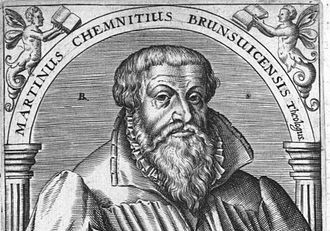
  • Chemnitz’s Homily Outline for the First Sunday of Advent (Ad Te Levavi)

    Chemnitz’s Homily Outline for the First Sunday of Advent (Ad Te Levavi)

    The following is my translation of Chemnitz’s homily outline for the First Sunday of Advent (Ad Te Levavi) found in his Postilla (Vol. I, pgs. 4–5). The gospel text is Matthew 21:1–9. Parentheses indicate the Scriptural citation or contain Chemnitz’s notes. Square brackets indicate my personal annotations. See also Chemnitz’s homily outline for Palmarum.

    Chemnitz’s Homily Outline:

    1. “Firstly, here with today’s Gospel, we thereby make the the beginning of the Sunday gospels in our churches, we deal with the fact that our King and our High Priest is not a newly introduced Messiah, but rather, He is the same one who was promised to the Fathers, in whom they also hoped, the one whom God the Father finally has sent and given that all the world hear Him (Deuteronomy 18[:15–22]), and through whom they ought to be saved, to whom God has pointed us toward in prophetic Word, and He alone that we ought to hear, receive and thereby abide in. This foundation is shown and demonstrated today to all pious Christians from God’s Word, so that we may be certain that we have the right Messiah, and, besides this, that we have the old faith which all the Fathers and the Prophets had. Of these two chief points the Jews were lacking, who when their Messiah came to them, they did not want to recognize Him nor receive Him, as John laments in John 1[:11], “He came to His own, and His own did not receive Him,” etc. Even today, the blinded Jews are lacking both of these two pieces and thereby lose their salvation. Here, we hear who the right Messiah is, and how we ought to correctly recognize Him and accept Him with the old pious Jews and the holy prophets, that we do not want to know of any other messiah than the one whom the Fathers and the Prophets saw and knew in the Spirit, and the one whom they also pointed us toward.
    2. Besides this, we ought to consider this in relation to Advent, what a great blessing of God it is that that this Messiah did not only come once in the flesh to accomplish the work of salvation such that He is now gone now that He is in His glory and will no longer concern Himself with us, His children, here on earth as to whether we come to salvation. Rather, we ought to lift up our souls today and learn to recognize this grace and blessing of God, that the same one who obtained and merited salvation for us wants also to come to us now today and also bring it about with us that He will give us into our laps the goods which He has obtained for us that we may also partake of them through the means [of grace], of which the prophet speaks when he says, “Say to the daughter of Zion: Behold, your King comes to you!” [Zechariah 9:9], etc. And who this daughter of Zion is, namely, not only the Jews, but rather also the Gentiles, until the end of the world, as the prophet says. And when we are reminded of this and told this today at the beginning of the Sunday gospels, so we ought to thank our dear Lord Jesus Christ for it from our hearts and be happy about it, as the prophet says, “Rejoice, you daughter of Zion!” so that when we go elsewhere, and do not consider this high and great blessing of God as we ought and do not always thank God for it, that we nevertheless today do this at the very least in the great congregation of God (Gemein Gottes), when we are with one another so that God may be given His due of many thanks from many people together, as St. Paul says in His second epistle to the Corinthians [2:1:11, 14, 15; 9:12, 15].
    3. But chiefly, this is also to be well-noted, that in today’s Gospel we have a beautiful guide as to what the right ancient religion and doctrine is, which bears witness that this alone is the truth of the divine Word and is a power of God unto salvation for those who believe in it (Romans 1[:16–17]).”