Tag: Faith

  • Notes and Useful Applications for Galatians 3:23–29 from Das Weimarische Bibelwerk (1877)

    The following is my translation of the notes and useful applications for the Epistle Reading of the Feast of the Circumcision and Name of Jesus, Galatians 3:23–29, as they are found in Das Weimarische Bibelwerk (1877). Square brackets indicate my own notes and additions. For the useful applications, I recommend the reader see this very helpful article by Dr. Benjamin T. G. Mayes.

    III. A report concerning the right use of the Law. (v. 23–29)

    Annotated Translation

    23. But, before faith came, (before the preaching of the Gospel concerning the now sent Messiah, which teaches the faith, and through which the Holy Spirit works faith, was proclaimed and spared in the world, that is, during the time of the Old Testament, before the coming of the Son of God in the flesh), we were under the Law (as those constricted) *, and were sealed (so that we were not allowed to live out our pleasure; that in this way we might bear an even greater longing for the Messiah) for faith, which should then be revealed (until the time when the Gospel should be preached in all he world and we were redeemed from the burden of the Law).

    * Galatians 4:3 (Romans 7:6, 16:25ff.)

    24. In this way the Law was our disciplinarian (and had kept us in school under disciples, and also through its figures and types directed us) unto Christ (just as also a disciplinarian holds a young boy strictly until he comes to his years and can rule himself, in this way, the Law has driven us through the revelation and accusation of our sin and through strict demanding of a perfect obedience, that we yearn after Christ, who would fulfill the Law in our stead and redeem us from the curse of the Law), * so that we be justified through faith (in Him).

    * Romans 10:4 (Galatians 4:19; Matthew 5:17)

    25. But now that faith has come (since now in the New Testament the Gospel concerning the appeared Messiah is preached in all the world), we are no longer under the disciplinarian (we are free from the Levitical ordinances and from the curse of the Law of the Ten Commandments).

    (Galatians 4:2ff.)

    26. For * you (believers) are all (you are according to descent Jews or Gentiles, Galatians 3:28) God’s children (and thereafter also heirs of salvation) through faith in Christ Jesus.

    * Isaiah 56:5; John 1:12; Romans 8:17 (Galatians 4:5)

    27. For as many * of you1 who are baptized (as many among you have received the Sacrament of Holy Baptist, not only according to Christ’s command, but also and chiefly unto His fellowship by faith in Him, which in the New Testament has been instituted in the stead of circumcision, Colossians 2:11), † have put on (and have come into the fellowship of all the goods of) Christ (and His righteousness through faith).

    * Romans 6:3

    1 Greek: “into Christ” [εἰς Χριστὸν]

    † Romans 13:14

    28. Here * there is neither Jew nor Greek, here there is neither slave nor free man, here there is neither man nor woman (here it is not seen nor counted before God whether someone is a Jew or Gentile, a bondservant or a free man, a man or a woman, as indeed was especially strongly considered under the Law of Moses) for you are altogether one in Christ Jesus (each one as the other is pleasing to God for the sake of Christ; also you are altogether members of one spiritual body of which Christ is the Head).

    * Romans 10:12; 1 Corinthians 12:13 (Colossians 3:11; Ephesians 2:14ff.)

    29. But if you are Christ’s (incorporated into Christ through faith and united with Him), so you are indeed * Abraham’s offspring (spiritual children of Abraham, the father of all believers), and heirs (of eternal life) according to the promise (which was made to Abraham).

    * Romans 9:7 (Romans 2:28ff, 4:17)

    Useful Applications

    III. DOCTRINE: Those who are baptized have put on Christ and have come into the fellowship of all His heavenly goods (v. 27). DOCTRINE: Indeed, whoever truly believes is God’s child; whatever he may be according to estate, whoever he may be, he can expect the heavenly inheritance (v. 26–29).

  • Notes and Useful Applications for Matthew 25:1–13 from Das Weimarische Bibelwerk (1877)

    The following is my translation of the notes and useful applications for the Holy Gospel for the Twenty-Seventh Sunday after Trinity, Matthew 25:1–13, as they are found in Das Weimarische Bibelwerk (1877). Square brackets indicate my own notes and additions. For the useful applications, I recommend the reader see this very helpful article by Dr. Benjamin T. G. Mayes.

    I. The parable of the ten virgins. (v. 1–13)

    Annotated Text

    1. Then (when Christ comes to hold the judgment) 1 the Kingdom of Heaven (the estate of those who publicly confess themselves to [be part of] the Church of God and to the Gospel) will be like ten 2 virgins, who 3 took their lamps  (presented themselves externally as Christians) and went out to meet the Bridegroom (Christ).

    1 Or, much more in the last times and with reference to His second coming.

    2 † A number of which was commonly required at solemn Jewish ceremonies.

    3 * Invited as guests for a wedding, which in those lands was for the most part held in the evening.

    2. But five of them were foolish (by which those are to be understood who do not deal wisely in their Christianity and who do not let their salvation be a matter of true seriousness to themselves), and five were wise (by which those are to be understood who are upright Christians, who are understanding what the will of the Lord is, Ephesians 5:17, and who fulfill it in deed).

    (2 Timothy 3:5; Revelation 14:4)

    3. The foolish took their lamps; however, they did not take oil along with themselves 1 (they did not have true saving faith and Christian virtues, but rather were only hypocrites).2

    1 In separate vessels, to refill their lamps in the case of a longer delay.

    2 † Here, the oil is the grace of the Holy Spirit (Psalm 45:8), which is mediated by the Word and Sacraments, which works faith, love, and all good in men, and which prepares their hearts in the grace of God for willing and joyful service.

    4. But the wise took oil in their vessels along with their lamps (also well provided with oil). (Luther: “The lamps without oil are good works without faith, which must all be quenched. The vessel of oil however is faith in the conscience in the grace of God, which does good works that endure.”)

    5. Now, when the Bridegroom was delayed (with His coming), they * all became drowsy and slept (in such a form that they did not wait with due care for the coming of Christ).

    * James 3:2

    6. But, at midnight (when they least expected it) there was a cry (through the sound of the trumpet): “Behold, the Bridegroom comes; go out to meet Him!”

    [For the trumpet sound, see Matthew 24:31; 1 Corinthians 15:52]

    7. Then * all those virgins rose and trimmed their lamps (they prepared their lamps and poured oil into them).

    * Luke 12:36ff.

    8. But the foolish said to the wise, “Give us some of your oil, for our lamps are quenched.”

    9. Then the wise answered and said, “Not so, so that there may not be a lack for us and you. But go away to the merchants and buy for yourselves (buy where you want, we have nothing left over for you. Luther: “But just as here none gives the oil to another, so also must each believe for himself”).

    10. And when they went out to buy, the Bridegroom came, and those who were ready * went in with Him to the wedding (into the joy of eternal life), and the door was shut (so that no one could come in anymore).

    * Revelation 19:7

    11. Finally, the other virgins also came and * said, “Lord, Lord (they repeated this word ‘Lord’ from hypocritical hearts, Matthew 7:22; Luke 6:46), open to us!”

    * Luke 13:25ff.

    1 * Or also, from all too-late recognition of the majesty of Christ, Isaiah 45:23; Philippians 2:10–11

    12. But He answered and said, “Truly, I say to you, * I do not know you (I regard you not; you do not belong to My wedding, for you had the time of grace, and when you ought to have sought the oil of true faith working through love, you did not pay attention to it; and now it is too late).

    * Matthew 7:23; Psalm 1:6

    1 * I cannot recognize you, with your fruitless behavior, as the companions of My bride.

    13. Therefore, * watch (be prepared at all times), for you neither know the day nor the hour in which the Son of Man will come. (In the following parable [i.e., the Parable of the Talents, Matthew 25:14–30], Christ reminds us that each person ought to righty use and employ the gifts God has imparted to him during the time of his [earthly] life, so that on the Last Day, he may receive a reward for his faithfulness and diligence, yet by grace. But it is to be understood with this parable, that Christ will deal with us in this manner.)

    * Matthew 24:42; Mark 13:33ff.; Luke 21:36 (Revelation 16:15)

    Useful Applications

    I. CORRECTION: That we ought to be watchful at all times in faith and remain in preparedness (which is signified by the oil and the burning lamps of the virgins), so that we meet the heavenly Bridegroom spiritually when He appears in His glory for judgment, and so that we do not neglect the time of grace according to the likeness of the foolish virgins. (v. 1–13)

  • Notes and Useful Applications for John 4:47–54 from Das Weimarische Bibelwerk (1877)

    The following is my translation of the notes and useful applications for the Holy Gospel for the Twenty-First Sunday after Trinity, John 4:47–54, as they are found in Das Weimarische Bibelwerk (1877). Square brackets indicate my own notes and additions. For the useful applications, I recommend the reader see this very helpful article by Dr. Benjamin T. G. Mayes.

    II. How Jesus was received in Nazareth and in other places, and also how the royal official’s son was freed from the fever. (v. 43–54)

    Annotated Text

    47. And there was a royal official (a distinguished servant in the house of Herod the tetrarch, who nevertheless was considered a king by the common man and thus was called a king, Matthew 14:1, 9; Mark 6:14), whose son lay sick in Capernaum. This one heard that Jesus came (He had learned that Jesus had come) from Judea in Galilee, and he went to Him (to Cana, about five miles’ way), and he asked Him that He come down (go with him to Capernaum) and help his son, for he was sick unto death (therefore, he also supposed that Christ would have to be present himself for so dangerous an illness, and that he could not perform this work of healing if he were absent, much less raise him from the dead if he should die).

    48. And Jesus said to him: * “If you do not see signs and wonders, ** then you will not believe (“You Jews believe no more than you see. If I go with you, you suppose that I could help your son; but what kind of faith is that?” To believe rightly means not to doubt at all about that which one does not see, Hebrews 11:1, and to ground oneself in the omnipotence and goodness of God insomuch that he can and will help, even above and against all sense and reason).

    * John 2:18; 1 Corinthians 1:22

    ** behold presently with your own eyes. The answer is aimed at the request to come down in v. 47 and agrees with Matthew 9:18.

    49. The royal official said (further, in the weakness of his faith) to Him, “Lord, come down, before my child dies (otherwise, Your presence will be in vain).

    50.  Jesus said to him, “Go (at this My Word, to which you shall attach firm faith), * your son (has not died as you think, but) lives (through the divine power of this My Word, and when you come home, you will find him alive and well).” The man believed the Word that Jesus spoke to him, and he went (in certain confidence that the Lord’s Word would come to pass; therefore, he also did not hurry home all at once, to which he could have come that same evening if he had wanted, but rather remained overnight on the way).

    * 1 Kings 17:23

    51. And while he was going (further, on the next day), his servants met him, proclaimed it to him and said, “Your son lives (and is completely alive, healthy, and strong).”

    52. Then he investigated from them the hour in which it had become better with him. And they said to him, “Yesterday, around the seventh hour (according to our time, around 1 PM in the afternoon) the fever left him.”

    53. Then the Father realized (and heard precisely) that it was (exactly) around the hour in which Jesus had said to him, “Your son lives (v. 50).” And he (as now he had been fully convinced of the divine miraculous power of Christ) believed along with his entire household (his wife, children, and household servants were brought through to true faith in Christ. And some hold that this royal official’s wife was Joanna, who is mentioned in Luke 8:3, and that she is called the wife of Chuza, the steward of Herod, who followed the Lord and ministered to Him from her own possessions).

    (Acts 16:32, 18:8)

    54. This is now the second sign that Jesus did when He came from Judea into Galilee. (The first is described in John 2:7ff.)

    Useful Applications

    II. DOCTRINE: What faith or heartfelt confidence in Christ’s Word and promise has for power and might is testified by the royal official (v. 50–53). DOCTRINE: But how the Lord Jesus often uses many wondrous preparations and arrangements to awaken and to strengthen faith is seen from both stories (v. 16–54).

  • Notes and Useful Applications for Romans 3:19–28 from Das Weimarische Bibelwerk (1877)

    The following is my translation of the notes and useful applications for the Epistle Reading for the Commemoration of the Lutheran Reformation (Reformation Day), Romans 3:19–28, as they are found in Das Weimarische Bibelwerk (1877). Square brackets indicate my own notes and additions. For the useful applications, I recommend the reader see this very helpful article by Dr. Benjamin T. G. Mayes.

    II. The conclusion of the previously led disputation, that, namely, neither Jew nor Gentile know righteousness with works of the Law, because they both trespass the Law. (v. 9–23)

    III. Proof that righteousness comes from faith. (v. 24–31)

    Annotated Text

    19. But we know (as those born Jews, to whom was entrusted what God had spoken, Romans 3:2), that whatever the Law (the Scripture of the Old Testament) says, it says to those who are under the Law (who belong to the Jewish polity);1 so that every (Jewish and Gentile) * mouth be stopped (that no one can boast of their own righteousness, but rather must humble himself before God and recognize His inborn, as well as actual sin), and all the world be accountable to God (that all men in the entire world confess that on account of their sin are subject to the righteous judgment of God and eternal condemnation).  

    1 And either have received it in written manner, or have it inscribed onto their heart by nature (Romans 2:15); for here the saying is of the Law which pertains to all the world.

    * Psalm 107:42; Ezekiel 16:63; Galatians 3:22 (1 Kings 8:46)

    20. Therefore,1 that no flesh (no man, be he Jew or Gentile) * by works of the Law (which are done according to the Ten Commandments) may be justified (nor can be declared righteous before God) by Him (the Lord, his God); for (now after the fall into sin) through the Law (grasped in the Ten Commandments) comes (only) knowledge (and anxious feeling) of sin.

    1 Greek: Alternatively, “Thus it follows…” [διότι]  

    * Galatians 2:16; Psalm 143:2 (Romans 7:7)

    21. But now (in the New Testament) the righteousness which counts before God is without doing the Law (and its works),1 is revealed (in the Gospel, as a high hidden mystery) and (yet previously) is testified through the * Law (of Moses) and the Prophets.

    1 Greek: “the righteousness of God” (which He Himself provides and bestows, also which He only accepts as pleasing to Him and allows to count before His judgment).

    * John 5:46; Acts 10:43 (Genesis 15:6, 22:18; Isaiah 53:11; Jeremiah 23:6)

    22. Now I say of such (fully counting) righteousness before God which then comes through faith in Jesus Christ to all and upon all, when they believe (because faith is the only means through we grasp and appropriate to ourselves the promised righteousness won by Christ; but God reckons it to the one who believes in this manner).

    (Philippians 3:9)

    23. For * there is here (between Jews and Gentiles) no distinction;1 they are † altogether sinners (Luther: “Mark this when he says, ‘they are altogether sinners,’ for this is the chief point and the middle place of this epistle and of all of Scripture, namely, that all is sinful which is not redeemed through the blood of Christ and reckoned in faith. Therefore, grasp this text well, for here lies underneath all works, merit, and boast, as he himself says here, and there only remains purely God’s grace and honor”), and lack the glory which they ought to have before God (namely, the increated holiness and perfect inherent righteousness),

    * Romans 10:12; Galatians 3:22, 28

    1 Greek: “Because” [γὰρ]

    † 1 Kings 8:46 (Romans 3:19, 11:32; Colossians 3:11)

    24. and are justified * without (their own) merit from His (from God’s) grace (and pure sheer mercy), through the (perfect) redemption, which has happened through Jesus Christ;

    * Ephesians 2:8

    25. Whom God has set forth (and ordained from eternity) for a * mercy seat (of which the type was the mercy seat, that is, the cover over the Ark of the Covenant in the Old Testament, Exodus 25:17; because Christ has reconciled us with God and covered our sin which was committed against the Ten Commandments), through faith in His blood (through His blood, which He poured out for us as an atoning sacrifice), that He might demonstrate (and bestow) the righteousness that counts before Him, in that He forgives sin which has previously remained under divine forbearance1 (Luther: “Sin could neither be taken away by the Law nor by any good work; it had to be done by Christ and by forgiveness;” therefore, also in the Old Testament the sins of believers were forgiven solely and only for the sake of the coming Messiah);

    * Leviticus 16:15; Hebrews 4:6 (Acts 13:38ff.; 2 Corinthians 5:19; 1 Timothy 2:6; Titus 3:5ff.; 1 Peter 1:18; 1 John 2:2ff.)

    1 Greek: Alternatively, “As proof of His (earnest) punishing righteousness, because He had previously (in the Old Testament, until Christ, Hebrews 9:15) allowed committed transgressions to pass by, Romans 3:26, under divine (great) forbearance (so that one might think that God did not consider sin to be great; indeed, I say once more), as a (clear) proof of His punishing righteousness in this (appointed by divine wisdom) fitting time (since Christ, the guarantor, has born the wrath and completely expiated it).”

    26. in order that He might at this time (the world in which the Son came in the flesh, and carried out the work of redemption) demonstrate1 (and bestow) the righteousness which counts before Him (by which we can stand before Him); so that He alone may be righteous (that He might be recognized by everyone as righteous, just as He alone is good, Matthew 19:17, and truthful), and make2 righteous the one who has faith in Jesus (who holds fast to Christ with true faith).

    (Romans 4:5)

    1 Greek: “show” [πρὸς τὴν ἔνδειξιν] (offer to all the world)

    2 * “Nevertheless also,” or according to the Greek, “also in that He makes righteous” [καὶ]

    27. Where * now remains boasting (of one’s own righteousness, as if a man could earn heaven from God the Lord)? It is over1 (and terminated. With such an alien righteousness bestowed purely out of pure grace, it has no place). Through which law (or teaching)? Through the works of the Law (through the teaching which requires works according to the Holy Ten Commandments in us and from us)? Not in this way (for then man would have a reason to boast of it, Romans 4:2), but rather through the law of faith (through the doctrine of the Holy Gospel, which requires faith in Christ for righteousness, and therefore teaches that by our own righteousness we cannot stand before God).

    * Romans 2:17, 23; 1 Corinthians 1:29, 31 (Romans 8:2; Ephesians 2:8–9)

    1 Greek: “excluded” [ἐξεκλείσθη]

    28. Therefore * we now maintain (and infallibly conclude), that a man (be he Jew or Gentile) is (spoken) righteous (before the judgement of God) without works of the Law, only1 through faith (in Christ).

    * Galatians 2:16ff (Acts 13:38)

    1 Although this little word is not expressly found in the Greek text, nevertheless the manner of speaking of the German language requires such a contrast, which also agrees with Paul’s clear words, “as only” (Galatians 2:16), Christ’s procedure (Matthew 4:10; cf. Deuteronomy 6:13), and finally also the example of the Latin common Bible itself (Leviticus 31:2).  

    Useful Applications

    II. DOCTRINE: That all men, none excepted, are sinners, and thus no one can be justified through works of the Law, since they are imperfect and tainted with sin. (v. 20–23) III. DOCTRINE: That we are justified without merit, by God’s grace, through the redemption which has happened through Christ Jesus, by faith in Him. (v. 24–25) DOCTRINE: That when boasting of worthiness before God has been struck down, thereby joy unto thankfulness is all the more awakened, along with all humility. (v. 27–31)

  • Chemnitz’s Homily for the Eighth Sunday after Trinity

    Chemnitz’s Homily for the Eighth Sunday after Trinity

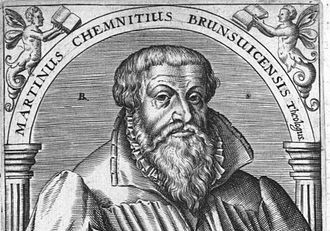
    The following is my translation of Martin Chemnitz’s homily for the Eighth Sunday after Trinity as found in his Postilla (Vol. II, pgs. 369–92). Chemnitz uses a composite text based on Matthew 7:15–27 and Luke 6:43–49. Square brackets indicate my own notes and additions whereas curly brackets indicate marginal notes present in the original text. Please note that this page is a work in progress.

    Gospel Text

    Forthcoming.

    Explanation

    Forthcoming.

    {Division of the Sermon}

    This is thus the summary of this Gospel, whose explanation we now want to pay attention to in these four points.

    1. First, that we want to see to this, how the Lord Christ does not vainly make this earnest admonition (Vermahnung) to the Church and the congregation (an die Kirche und Gemeine) that they ought to watch themselves when they have and hear God’s Word taught clearly and purely, that they also then ought to remember that the time could come when they could be robbed again of this precious treasure so that we are not scandalized when we see that it still goes on today that where the pure doctrine and Church of Christ is, there the devil also has a chapel there and wants to bring in his false lying-doctrine (LügenLehre) among the people.
    2. Second, that we not only ought to know that false teachers will arise at all times and trouble the Church of God and presume to seduce Christians with their false doctrine, but rather that He also earnestly and diligently admonishes us that we ought to beware of them and fear them, so that we also not be led into an error through them.
    3. Third, because the false teachers can cleverly cover their knavery and deceit, we must therefore learn to recognize them so that we may beware of them and not be deceived and led astray by them so easily. How we ought not concern ourselves with the external sheep’s clothing (eusserlichen Schafpeltz), but rather ought to look at their fruits and mark them, what they say and teach, and from what fruit the tree bears, take judgement of each preacher (Prediger).
    4. Finally, fourth and last, when we now have God’s Word clearly and purely and God has preserved us from false doctrine, and allows His Word to be preached to us without any falsification (Verfälschung), that we nevertheless ought not think that it is now enough and we need nothing more because we hear God’s Word, make use of the sacraments, pray, and call upon God our Lord, and lead a fine external appearance before the world; rather, that we should then look closely that we do not deceive ourselves, do not fall into security (Sicherheit) and let it remain only with the hearing of the Word and external exercises (äusserlichen Ubungen), but that we ought to be diligent to conduct ourselves according to God’s Word in our lives and do the will of God the heavenly Father, and thus may not be only mouth-Christians (Maulchristen) and hypocrites, but rather true Christians and doers of the word, and not only hearers.

    Your grace ought to now pay attention to these four points in this sermon, and thereby grasp simply and finely grasp the right use of this Gospel.

    Concerning the First Part

    Forthcoming.

    Concerning the Second Point

    Forthcoming.

    Concerning the Third Point

    Forthcoming.

    Concerning the Fourth Point

    Forthcoming.