Tag: Martin Chemnitz

  • Chemnitz’s Homily Outline for the First Sunday after Easter (Dominica Quasimodogeniti)

    Chemnitz’s Homily Outline for the First Sunday after Easter (Dominica Quasimodogeniti)

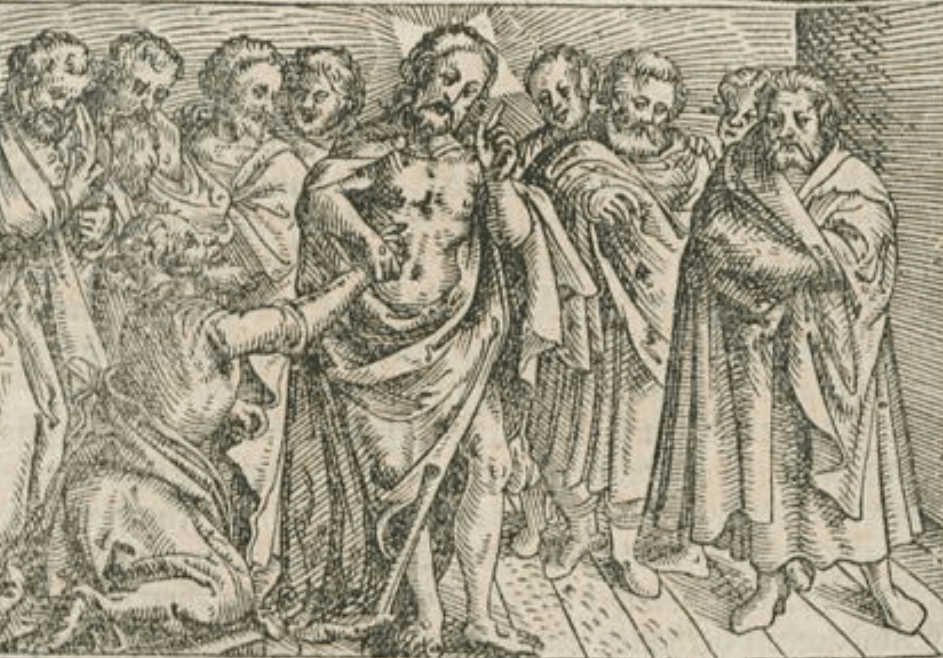
    The following is my translation of Martin Chemnitz’s homily outline for the First Sunday after Easter (Dominica Quasimodogeniti) found in his Postilla (Vol. II, pgs. 89–90). Chemnitz’s text is John 20:19–31. Square brackets indicate my own personal notes.

    Chemnitz’s Homily Outline

    “Now in order that we may handle this doctrine in a useful manner, so we will set it forth in these points:

    1. First, here is described, because the Lord Christ had previously declared that He had to suffer and die and rise again, in order that He institute the preaching office (Predigamt) on earth: How He has instituted the preaching office (Predigamt), and how preachers and hearers ought to thereby be reminded how the preaching office must and ought to be carried out, that thereby everything happens in the name of Christ and in the stead of Christ (in Namen Christi… und an Christi statt), and what He gives to preachers and to hearers as a reminder (Erinnerung) and for doctrine (Lehre).
    2. Second, how the Lord did not only institute the preaching office (Predigampt) in general (ins gemein), but rather directed it that it ought to be carried out that it be (seien) the keys of the kingdom of heaven, by which the unrepentant are to have heaven closed to them and the repentant are to have heaven opened and unlocked to them. And how the preacher ought to carry out and use these keys. Also, what the hearers ought to think of the keys, how they ought to use the loosing key for consolation (Trost), but ought to use the binding key for warning (Warnung), and how they ought not think, ‘Why do I care whether heaven is being barred only by the preacher? What power (Macht) does he have?’ But rather we ought to consider what the Lord says here: that what the preacher does here is valid in heaven with our Lord God and is effective there [John 20:23].1
    3. Third, how no man of high or low station (Standts), ought to presume to hinder God in this order and not allow the preaching office (Predigamt) to take its course both in its teaching office (Lehrampt) as well as in its rebuking office (Straffampt).2 Because God wants to maintain this order (Ordnung), and thereby be efficacious and through this means allow His treasury to be opened so that from it all the treasures of God—which are God’s, which the Son of God has acquired and earned for us through His obedience, suffering, and death—may be brought forth and be distributed among us. And how, the devil therefore sets himself so opposed to this office (Ampt), and especially the rebuking office (Straffampt). Therefore, all Christians, preachers, political authorities, and hearers ought all the more strongly to uphold it, that this office may be carried out unhindered among them.

    We will now deal with these three points briefly in this sermon. To this end, the blessed God give us His Holy Spirit, that we may hear and learn fruitfully.”

    Footnotes:

    1. The reader should remember and consider the Small Catechism’s explanation of the Office of the Keys: “The Office of the Keys is that special authority which Christ has given to His church on earth to forgive the sins of repentant sinners, but to withhold forgiveness from the unrepentant as long as they do not repent.” ↩︎
    2. The rebuking office (Straffampt) is typically dealt with more explicitly on the Fifth Sunday after Easter because of John 16:8, “And when the Paraclete comes, He will convict/rebuke the world of sin, and of righteousness, and of judgment.” See Chemnitz, Postilla, Vol II. pgs. 166ff. See also Johann Gerhard, Theological Commonplaces, Vol. XXVI/2, § 270. ↩︎
  • Chemnitz’s Homily Outline for Holy (Maundy) Thursday

    Chemnitz’s Homily Outline for Holy (Maundy) Thursday

    The following is a translation of Chemnitz’s outline for Holy/Maundy Thursday (“Green Thursday,” Gründonnerstag) as found in his Postilla (Vol. I, pg. 648). Chemnitz uses a composite text from Matthew 26:20–39, Mark 14:12–25, Luke 22:7–20, and 1 Corinthians 11:23–29. The text in parentheses comes from the original text. I have added additional text in square brackets to aid the reader.

    Chemnitz’s Outline:

    “This present day, which we call Good or Green Thursday (guten oder den grünen Donnerstag), has at all times been honorably, commendably, and Christianly observed in the holy Christian Church of the New Testament, and it observes this not out of frivolity or custom, but because of the remarkable history and great deeds which the Son of God, our dear Lord and Savior Jesus Christ, accomplished on this day.

    1. For first, the Lord Christ today had eaten the passover lamb (Osterlamb), according to the Law and order of God (nach Gottes Gesetz und Ordnung) [Exodus 12], and according to the manner and custom of the Old Testament, and thereby bid farewell (Valete gegeben) to Moses and the entire Old Testament [see Hebrews 8:13].
    2. Second, He immediately thereafter instituted, ordained, and established the New Testament of His body and blood, which He gives us to eat and to drink in His Supper (in seinem Abendmal), that we thereby be reminded of His death [1 Corinthians 11:26], and by this means be assured that we also ought to enjoy His suffering and death (seines Leidens und Sterbens geniessen) for the forgiveness of our sin and the assurance of our salvation.

    So we will now briefly deal with these two parts and see what we have therein for instruction (Lehr), necessary reminder and warning (Erinnerung und Warnung), as well as constant comfort (Trost), and how we can apply them usefully.”

  • Chemnitz’s Homily Outline for the First Sunday of Advent (Ad Te Levavi)

    Chemnitz’s Homily Outline for the First Sunday of Advent (Ad Te Levavi)

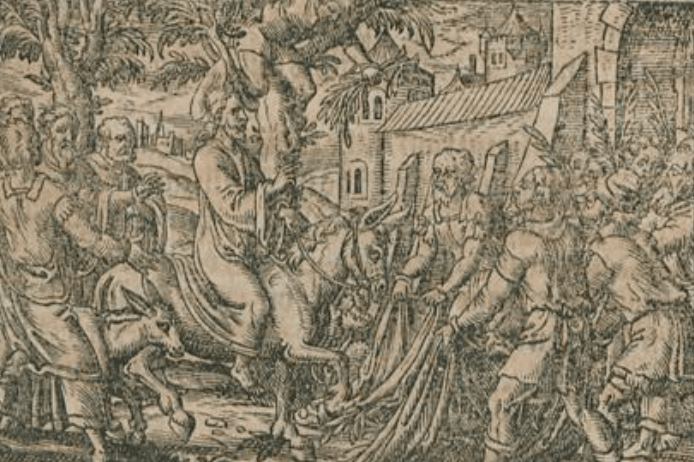
    The following is my translation of Chemnitz’s homily outline for the First Sunday of Advent (Ad Te Levavi) found in his Postilla (Vol. I, pgs. 4–5). The gospel text is Matthew 21:1–9. Parentheses indicate the Scriptural citation or contain Chemnitz’s notes. Square brackets indicate my personal annotations. See also Chemnitz’s homily outline for Palmarum.

    Chemnitz’s Homily Outline:

    1. “Firstly, here with today’s Gospel, we thereby make the the beginning of the Sunday gospels in our churches, we deal with the fact that our King and our High Priest is not a newly introduced Messiah, but rather, He is the same one who was promised to the Fathers, in whom they also hoped, the one whom God the Father finally has sent and given that all the world hear Him (Deuteronomy 18[:15–22]), and through whom they ought to be saved, to whom God has pointed us toward in prophetic Word, and He alone that we ought to hear, receive and thereby abide in. This foundation is shown and demonstrated today to all pious Christians from God’s Word, so that we may be certain that we have the right Messiah, and, besides this, that we have the old faith which all the Fathers and the Prophets had. Of these two chief points the Jews were lacking, who when their Messiah came to them, they did not want to recognize Him nor receive Him, as John laments in John 1[:11], “He came to His own, and His own did not receive Him,” etc. Even today, the blinded Jews are lacking both of these two pieces and thereby lose their salvation. Here, we hear who the right Messiah is, and how we ought to correctly recognize Him and accept Him with the old pious Jews and the holy prophets, that we do not want to know of any other messiah than the one whom the Fathers and the Prophets saw and knew in the Spirit, and the one whom they also pointed us toward.
    2. Besides this, we ought to consider this in relation to Advent, what a great blessing of God it is that that this Messiah did not only come once in the flesh to accomplish the work of salvation such that He is now gone now that He is in His glory and will no longer concern Himself with us, His children, here on earth as to whether we come to salvation. Rather, we ought to lift up our souls today and learn to recognize this grace and blessing of God, that the same one who obtained and merited salvation for us wants also to come to us now today and also bring it about with us that He will give us into our laps the goods which He has obtained for us that we may also partake of them through the means [of grace], of which the prophet speaks when he says, “Say to the daughter of Zion: Behold, your King comes to you!” [Zechariah 9:9], etc. And who this daughter of Zion is, namely, not only the Jews, but rather also the Gentiles, until the end of the world, as the prophet says. And when we are reminded of this and told this today at the beginning of the Sunday gospels, so we ought to thank our dear Lord Jesus Christ for it from our hearts and be happy about it, as the prophet says, “Rejoice, you daughter of Zion!” so that when we go elsewhere, and do not consider this high and great blessing of God as we ought and do not always thank God for it, that we nevertheless today do this at the very least in the great congregation of God (Gemein Gottes), when we are with one another so that God may be given His due of many thanks from many people together, as St. Paul says in His second epistle to the Corinthians [2:1:11, 14, 15; 9:12, 15].
    3. But chiefly, this is also to be well-noted, that in today’s Gospel we have a beautiful guide as to what the right ancient religion and doctrine is, which bears witness that this alone is the truth of the divine Word and is a power of God unto salvation for those who believe in it (Romans 1[:16–17]).”

  • Chemnitz’s Homily Outline for Judica (Lent 5)

    Chemnitz’s Homily Outline for Judica (Lent 5)

    The following is a translation of Martin Chemnitz’s Homily Outline for Judica (Lent 5), as found in his Postilla (Vol. 1, pgs. 576–77). Chemnitz’s text is John 8:46–59.

    Chemnitz’s Homily Outline:

    “Now this Gospel has many beautiful and necessary doctrines in it, which we want to handle in an orderly manner.

    1. First, of the fierce conflict between Christ and the Jews, in which one denounces the other, that finally comes to such seriousness that the Jews become so incensed that they want to stone Christ to death, even in the temple. From this we learn that a preacher cannot be friendly at all times when he wants to carry out his office with faithfulness and proper seriousness and zeal, as he is commanded by God, but rather must also at times be sharp and zealous when necessity demands it. The world becomes bitter and angry over this and can hardly tolerate such, and therefore becomes ill-disposed toward preachers and lies in wait for an opportunity to take revenge on them, to which they must not concern themselves with, but rather, regardless of all of this, they must do what belongs to their office and what is demanded of them by God, whatever the world may say about it.
    2. Second, what the fierce conflict between Christ and the Jews was about, namely, over religion and doctrine, which was the right doctrine of God’s Word, and what was the true Church of God. When the Jews appealed to their church, Christ on the other hand appealed to His own, when they said they were God’s people and the church of God, Christ said no to this. They boasted that because they were Abraham’s seed according to the flesh, they were righteous and free from all sin. Christ showed them that they are all sinners, and can be saved nowhere else than in Christ their promised Messiah, whom they despised, and did not want to hold as the Messiah, and thus, finally, they will also certainly die in their sins. Over these points Christ fought with the Jews so fiercely, which He does not want to be taken from Him, therefore He is so zealous.
    3. Third, how the Lord is not only zealous against His opponents and enemies, and speaks with the same sharpness and threatens those who persist in their own held opinions against God’s Word and their own consciences, what will therefore follow, and what danger they stand in, that they will die in their sins; but He also preaches as a mediator for the comfort of repentant and believing sinners, who hear His word and believe in Him, that through Him they will be saved, and be protected from eternal death.

    We want to handle these three points in this sermon, and set forth the chief doctrines which are presented to us here. The Almighty grant us His grace and Holy Spirit that we may thus hear and learn this, that from it we be certain of our faith, hold steadfastly and firmly to the pure doctrine, so that finally, through Christ, we may be freed from our sins, protected from eternal death through faith, and be and remain children and heirs of eternal life.”

  • Chemnitz’s Homily Outline for Laetare (Lent 4)

    Chemnitz’s Homily Outline for Laetare (Lent 4)

    The following is a translation of Chemnitz’s homily outline for Laetare (Lent 4), found in his Postilla (Vol I, pgs. 550–51). Chemnitz uses a combination of all four Gospel accounts: Matthew 14:13–21; Mark 6:30–44; Luke 9:10–17; and John 6:1–15 (see below). Square brackets indicate my own notes.

    Chemnitz’s Combined Reading:

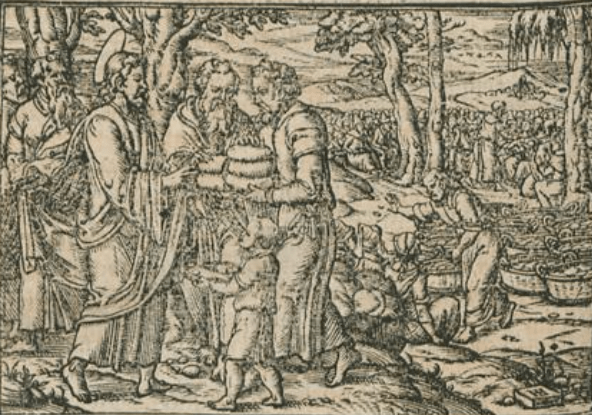
    And the apostles came again to gather to Jesus, and they reported everything to Him (what had happened to John), and they told Him the great things they had done and what they had taught. And He said to them, “Let us go into the desert and rest a little.” For there were many of them coming and going and they did not have enough time to eat. And he took them with Him and went away in a boat over the sea, to the place of Tiberias, in Galilee, which is called Bethsaida. And when the people heard this, and became aware of this, and they saw Him depart, they followed Him and went after Him. And many knew Him, and went together on foot from all the cities. And a great multitude followed Him and arrived before Him and came to Him because they saw the signs that He had done for the sick.
    But Jesus went up on a mountain and sat there by Himself with His disciples. Now the Passover, the Jewish festival, was near. And Jesus went out and saw the large crowd and He had compassion on them, for they were like sheep who had no shepherd. And He called them to Himself and began a long sermon and spoke to them of the Kingdom of God, and He healed their sick and made healthy those who were needy.
    But in the evening, when the day was beginning to draw to a close and the day was almost over, His disciples, the Twelve, came to Him, and said to Him, “This is a desert, and it is desolate here, and the day is now spent and the night is falling. Send the crowd away that they may go around into the villages and markets and buy themselves bread and food, for they have nothing to eat; that they may find lodging and food, for we are here in the desert.”
    But Jesus answered and said to them, “It is not necessary that they depart. You give them to eat.” And they said to Him, “Should we depart and and go buy two hundred pfennigs worth of bread and give it to them to eat?” Then Jesus lifted up His eyes and saw a great crowd coming to Him, and He said to Philip, “Where can we buy bread, that these may eat?” (He said this to test him, for He knew what He wanted to do.) But Philip answered Him, “Two hundred pfennigs is not enough for them that each of them take a little.”
    But He said to them, “How much bread do you have? Go and see.” And when they had found out, they said, “We have nothing more than five loaves of bread and two fish. Therefore, we must go and buy food for so large a crowd.” (For there were about five thousand men.) Then Andrew, Simon Peter’s brother, said to them, “There is a boy here who has five barley loaves and two fish, but what is this among so many?”
    But Jesus said to His disciples, “Make the people to lie down and sit in groups, fifty by fifty.” Now there was plenty of grass in that place. And He commanded them all to sit down in full table groups on the green grass. And they did so, all of them sat down in groups, hundreds by hundreds, fifty by fifty, so that about five thousand men laid down.
    Now Jesus took the five loaves of bread and two fish, sighed into heaven, gave thanks over them, and broke the bread, and gave it to the disciples so that they lay it before the people, and He divided the two fish among them all. And the disciples gave it to those who were seated, and likewise of the fish, as much as each desired. They all ate and they were satisfied.
    Now when they were satisfied, He said to His disciples, “Gather up the remaining fragments, so that nothing be lost.” So they gathered them and took up what remained of the fragments of the five barley loaves and fish which remained from those who had eaten. Now those who had eaten were five thousand men, besides women and children. Now, when the men saw the sign which Jesus did, they said, “Truly, this is the Prophet who is to come into the world.” When Jesus therefore noticed that they were coming to take him in order to make Him king, He immediately urged His disciples that they get into the boat and go over before Him to Bethsaida, until He had dismissed the crowd. And when He dismissed the crowd and sent them away, He climbed up into a mountain alone so that He could pray, and He withdrew once more to the mountain, He Himself alone.

    Chemnitz’s Homily Outline

    “We now want to take up these accounts for ourselves and deal with these points in an orderly manner:

    1. First, how in this account we see that it is God’s work, that God feeds and nourishes us men and provides for all our needs richly, which He has demonstrated not only in the first creation, but He does this indeed in every year, every hour, and every moment to men, beasts, and everything that lives on earth and brings it into effect; and how we ought to recognize this and give thanks to God for it.
    2. Second, pious Christians ought to accustom themselves that they always make use of this as a reminder and for comfort, and think that this therefore happened at that time, at the beginning of the New Testament, so that Christians of every time, who belong in the New Testament, can grasp constant comfort, so that just as the Lord Christ once took care of His disciples—leading them out of danger, feeding them in times of hunger and need, and comforting them in times of affliction—that we likewise also even today have to look to him with certainty, so that if we should also suffer something for the sake of God’s Word, be hated and be persecuted, hunger and thirst for the Gospel, we will not become fainthearted, much less despair, but rather trust God, who surely will sustain and provide for us; how this is so beautifully presented to us here, when the Lord sits down in the midst of His disciples and looks over them, comforts them, and speaks to satisfy them, then allows also the people to come to Him, allows Himself to be aroused to pity so that they are not abandoned and left comfortless, and takes care of them and helps them out. From this we ought also learn that God wants to do the same for us, as we have God’s Word, promise, and assurance to which we ought to firmly hold on to, and with this and other examples from Scripture, whereby God has proven that He wants to keep His promise and assurance, that we should regard them as certain and hold them to be true, and from this we ought to look to God, for He wants to provide for us both in body and in soul; and that we can now look to God for us in this time, just as the children of Israel had experienced this in the Old Testament; that we ought to remember and console ourselves with these accounts, just as the Jews had remembered and comforted themselves with the miracles that took place in the desert for forty years.
    3. Third, we also have in this account the manner and way in which God does things when He wants to help those who belong to Him, namely, that He does it in such a wonderful and peculiar way that we cannot judge it and understand it with our reason. For He begins with His beloved children to whom He promises salvation and rich blessings, so wonderfully that everyone must be astonished by it and often become fainthearted, and see nothing other than that everything is against them, and that they have no hope that God Himself will take care of them, while, in contrast, it goes well for the godless, who have everything to the full, who lack nothing, but rather find vain happiness wherever they turn and go about; that we ought not be troubled by this, but rather console ourselves that the happiness and prosperity of the godless will one day come to an end, and that all our misery and suffering will, in turn, come to a blessed end, and that we therefore ought not to place our trust in things that are temporal and transient, but rather that we ought to be content that we have the heavenly eternal goods and eternal salvation with our dear Lord Jesus Christ. Likewise, if our reason cannot deal with it and cannot understand how God wants to help, that we should not therefore think as if it were impossible, but rather that we ought to put all our reason aside and entrust it to God, who, in His time, will surely know how to find the means and way by which He will help us, even when we cannot yet see nor find it. Also that we recognize our misery and weakness, how little we often believe this, so also, that the irrational animals surpass us in this case who can trust God more than men; which is a shame to us and ought to guide us that we can learn to trust God also a little more than we usually do, and that we comfort ourselves with the examples of Holy Scripture, that just as God has cared for His own at all times, so He wants to prove it to us also now, however strange it may otherwise seem to us.
    4. Fourth, we then want to consider these accounts as they are described to us so powerfully by all four evangelists at length and with many beautiful circumstances so that we learn from how God tends to act, that when He has appeared as a stranger, as if He did not know what to advise us or as if He could not help us, He nevertheless finally, when His time has come, He comes for to us and proves Himself so that we must confess that it is a powerful thing and goes beyond all reason, so that God can prove His majesty and omnipotence, so that He can help powerfully, and thus, as St. Paul says, that we cannot understand or comprehend it [Romans 11:33].

    We want to consider these points in this sermon and deal with them briefly and simply in order that our faith may thereby be strengthened and that our confidence in God may be strengthened in both temporal and eternal needs and concerns.”

  • Chemnitz’s Homily Outline for Oculi (Lent 3)

    Chemnitz’s Homily Outline for Oculi (Lent 3)

    The following is a translation of Chemnitz’s homily outline for Oculi (Lent 3), found in his Postilla (Vol. I, pg. 519). Chemnitz uses a combination of the synoptic accounts found in Matthew 12:22–45, Mark 3:20–35, and Luke 11:14–28 (see below). Parentheses indicate marginal notes in the manuscript. Square brackets indicate my own notes.

    Chemnitz’s Synoptic Reading:
    They brought to Him a possessed man who was blind and mute, and He cast out the demon and healed Him so that the blind and mute man both spoke and saw. And all the people were astonished and amazed and said, “Is this not David’s Son?” But some among them, the Pharisees and scribes, who had come from Jerusalem, when they heard it, they said, “He has Beelzebub, and drives out the demons in no other way than through Beelzebub, the prince of demons.”
    Jesus, however, knew their thoughts, and called them together and spoke to them in parables, “How can one demon cast out another? Any kingdom that is divided is made desolate and may not stand, and any city or house that is divided may not stand, and one house falls upon the other. So then, if a demon casts out another and is divided against himself, how then will and may his kingdom stand? Because you say that I cast out the demon by Beelzebub, so he cannot stand, but rather it is over for him. So, if I cast out the demons by Beelzebub, then by whom do your children cast them out? Therefore, they will be your judges. But if I cast out the demons by the Spirit and Finger of God, then the Kingdom of God has come to you. Or how can someone enter a strong man’s house, fall upon him, and rob of his household goods, unless he first binds the strong man and then robs him of his house? When a strong armed man guards his palace, so his own goods remain in peace. However, when a stronger man comes upon him and overcomes him, so he takes from him his armor in which he trusted and divides the spoil. Whoever is not with me is against me, and whoever does not gather with me, he is scattered. Therefore, I say to you: All sins and blasphemies will be forgiven men, however the blasphemy against the Spirit will not be forgiven men. And whoever speaks something against the Son of Man, it will be forgiven him, but whoever speaks something against the Holy Spirit, it will not be forgiven him either in this or the next world.”
    “Either make a good tree and the fruit will be good or make a rotten tree and the fruit will be rotten, for the tree is known by its fruit. You brood of vipers, how can you speak good, because you are evil? For out of the fullness of the heart the mouth proceeds. A good man brings good things out of good treasure of his heart, and an evil man brings forth evil things out of his evil treasure. But I say to you that that men must give an account at the last judgment for every idle word that they have spoken. From your words you will be justified, and from your words you will be condemned.”
    Then some among the scribes and Pharisees answered and said, “Master, we want to see a sign from You.” And He answered and said to them, “The evil and adulterous kind seek a sign, and no sign will be given to it other than the sign of the prophet Jonah. For as Jonah was three days and three nights in the belly of the whale, so will the Son of Man be three days and three nights in the midst of the earth. The people of Nineveh will rise up at the last judgment with this generation and they will condemn it, because they repented at the preaching of Jonah, and behold, there is more here than Jonah. The queen of the south will rise up at the last judgment with this generation, and they will condemn it, for they came from the ends of the earth to hear the wisdom of Solomon, and behold, there is more here than Solomon.”
    “When an unclean spirit is cast out of men, so it wanders through arid places seeking rest and it finds none. Then he says, ‘I will return back to my house from which I had departed.’ And when he comes, he finds it empty, swept, and decorated. So he goes in and takes with himself seven other spirits more troublesome than himself, and when they come in, they dwell there and it becomes worse with the same person afterwards than it was before. So it will also be with this wicked generation.”
    Then while He was still speaking to the people, behold, His mother and His brothers came up, wanting to speak with Him. Then they said that He would come to His senses [cf. Mark 3:21]. Then the people came together, for they had nothing to eat. Then one said to Him, “Look, your mother and your brothers are standing outside and they want to speak with You.” But He answered and said to him, “Who is my mother and who are my brothers?” And He stretched out His hand over His disciples and said, “Behold, this is my mother and my brother, for whoever does the will of my Father in heaven, that one is my brother, sister, and mother.”
    And it happened as He spoke such, a woman among the people lifted up her voice and said to Him, “Blessed is the womb which has borne You and the breasts which nursed You!” But He said, “Indeed, blessed are those who hear the word of God and keep it.”

    Chemnitz’s Homily Outline:

    “In order that we may learn something useful from this long text and expansive Gospel, so we want to divide it into these three points:

    (Concerning the Great Power and Tyranny of the Devil)

    1. First, that we see in this poor wretched man who is presented to us that the Devil has possessed him bodily and has blinded his eyes and robbed him of speech and thus proves His gruesome tyranny in him; and how the Lord further gives a sermon on it, what a mighty prince Satan is, how he is armed, and what a firm castle he had in him, etc. Thereby, we want to allow ourselves to be reminded of the great might and power of the vexatious Satan, which he obtained over us poor men by way of our sin; also from God’s Word and this text, we are reminded how we should use such doctrine in the fear of God, and ought to thank God, who has redeemed us from such tyranny of this vile fiend.

    (Concerning the Counter-Power and Great Strength of the Lord Christ)

    2. Second, concerning the greater power of our beloved Lord Jesus Christ, which He proved over the devil when He overcame him and delivered us from His kingdom, that He overcame the strong armed man, and took over His palace, stripped Him of His armor, took away all His power and whatever property He had until that time in peace, and has distributed the spoil among His people.

    (Concerning the Use of Both Doctrines, for Preachers and Hearers)

    3. Third, this is the most important, how we ought to make right use of this doctrine on both sides according to the instruction which the Lord Christ Himself made in this Gospel, and thus He gives all preachers an instruction, how they ought to carry out their office (Ampt), so that they not think it is enough when they preach to their hearers of the Devil’s kingdom and warn them of it, and of God’s kingdom to which they ought to exhort them that they may be found therein; but rather that they pay attention to how each makes use of such doctrine; that also the hearers may take instruction from this, so that they apply the test to themselves, how they hear God’s Word and how they conduct their lives accordingly, how they are found either in God’s Kingdom or in the devil’s kingdom.

    On these three points we want direct it, what is to be handled with this Gospel. May the blessed God bestow His grace that such Christian instruction may create much fruit with us. Amen.”
  • Chemnitz’s Homily Outline for Dominica Reminiscere (Lent 2)

    Chemnitz’s Homily Outline for Dominica Reminiscere (Lent 2)

    The following is a translation of Chemnitz’s homily outline for Reminiscere (Lent 2), found in his Postilla (Vol. I, pg. 484–85). Chemnitz uses a combination of the account from Matthew 15:21–28 and Mark 7:24–30. I have added allusions to other biblical passages in square brackets.

    Chemnitz’s Outline:

    “Now in order that we may take away something useful for ourselves for our teaching (Lehr), remembrance (Erinnerung), and comfort (Trost), we want to deal with these parts in the Gospel:

    1. First, why God sends the cross and afflicts this Canaanite woman and thus all pious Christians; namely, if we otherwise do not want to come to him, the lust of the world, the lust of the eyes, and prideful life (read: hoffärtiges Leben) would lead us away from the Kingdom of Christ and keep us from it; that we thus would be led through cross and affliction to the Lord Christ, as this woman was through her house cross (Hauß Kreuz) on her daughter; and that we would be kept with Him as the true Shepherd of our souls [1 Peter 2:25] to eternal life.
    2. Second, when we now come to Christ with our needs, that we ought to ground our prayer in these two points: (1) First, that He, as a proven Son of God, can help mightily in more ways than we can think or comprehend [Ephesians 3:20], and (2) thereafter also as our dear fellow Brother, according to His human nature, He bears a heartfelt compassion toward our misery, and wants to willingly and gladly help us.
    3. Third, how if He were to delay with His help for a long time, and we were to cry out in vain for a long time, how we should learn to right ourselves in His mind, overcome the trial (Anfechtung) with patience, and take comfort in His promise that He will not deceive (read: betrügen) us, but rather will give us all that our hearts desire.
    4. In conclusion, the use of the account of the Canaanite woman, how we can make use of her example throughout all of our Christianity.”
  • Chemnitz’s Homily Outline for Invocavit (Lent 1)

    Chemnitz’s Homily Outline for Invocavit (Lent 1)

    The following is a translation of Chemnitz’s homily outline for Invocavit (Lent 1), found in his Postilla (Vol. I, pg. 449–50). Chemnitz uses a combination of all three synoptic accounts for the Temptation of our Lord (Matthew 4:1–11; Mark 1:12–13; Luke 4:1–13).

    Chemnitz’s Homily Outline:

    “That we may handle this teaching in an orderly manner and grasp it so that each can make use of it and use it in a Christian manner, so we will divide it thus into these parts:

    1. Firstly, we will see powerful and glorious the account is described, how the Lord Christ, after He was proclaimed by God at the Jordan that He was the Messiah, thus has stepped into His office (Ampt), how both of the high great prophets, Moses, who gave the Law, and Elijah, who was a chief of all prophets, began their ministry for Him, so that everyone from this ought to see that although He walked around in poor form (armen Gestalt), He was nonetheless the great prophet which Moses had promised from God’s command (Deuteronomy 18[:15–18]).
    2. Second, how the devil himself has tempted Christ, and thus held the chief dispute (Häuptstreit) with Him.
    3. Third, how from this all Christians ought to learn that just as the devil has tempted our Head, the Lord Christ, so also he will tempt us, His members, and dares to bring us into his own kingdom again.
    4. Fourth, how the devil undertakes his task when he wants to tempt a Christian, what He uses for means and ways, how this is described here in a threefold way so that each can clearly recognize and notice when the devil shows himself to him with one or more of these temptations.
    5. Fifth, how we, according to the example of Christ ought to withstand the devil, and what we must have in our hand for defense (Wehre) and weapons (Waffen) so that we can defend ourselves against this vile and powerful fiend. And how this ought to be our comfort (Trost), that if we are too weak for the prince of this world, that He who crushed His head [Genesis 3:15] will then fight for us [Romans 16:20], and how He has overcome him and obtained the victory against him, as this account says.

    Concerning these five parts we will now deal with this gospel, that we all through God’s grace may make use of this account for teaching (Lehre), for warning (Warnung), and for comfort (Trost).”

  • Chemnitz’s Homily Outline for Estomihi (Quinquagesima, Baptism of our Lord)

    Chemnitz’s Homily Outline for Estomihi (Quinquagesima, Baptism of our Lord)

    The following is a translation of Martin Chemnitz’s homily outline found in his postil for Estomihi, or Quinquagesima(Postilla, Volume I, pgs. 426–427). At Chemnitz’s time it was common for churches to observe the Baptism of our Lord on the final Sunday before Lent, which connects the Baptism of our Lord to His temptation (the Gospel reading for the First Sunday of Lent). Chemnitz cites all three versions of the Baptism of our Lord found in the synoptic gospels (Matthew 3:13–17; Mark 1:9–11; Luke 3:21–22). The Evangelical Lutheran Synod (ELS) still follows this tradition. In the ELS lectionary, the assigned Old Testament reading is Isaiah 42:1–7 and the Epistle is 1 Peter 3:18–22.

    Chemnitz’s Outline:

    “We will now thus explain this glorious and beautiful account that we may set forth these points:

    1. First, as this account reports, in what manner and in which form our Lord and Savior Jesus Christ was ordained and anointed to the office (Ampt) of Messiah, so that we can be certain of this when we recognize and accept Him as the Messiah, confess Him and hold to Him, that we therefore make no error, but rather receive in Him God’s grace and help, eternal life, and salvation.
    2. Second, what office (Ampt) Christ has, that He is anointed as the High Priest, King, and Prophet, and how He holds this office in heaven, and what counts there.
    3. Third, because Christ is proclaimed here as the only Messiah, and all men are commanded that they recognize Him as such, and ought to hear Him, so here we have this point, which is of the upmost importance for us, that we can know what we ought to hold concerning the doctrine of Christ (Lehre Christi) and everything that we find therein, namely, that it is the doctrine to which God the Father Himself has directed us, and in which the Holy Spirit is present, and He wants to be thereby efficacious so that heaven may be opened to us through it, and the way to eternal life may be prepared and readied.
    4. Fourth, next to the Word, we also have the most revered sacraments, to which we are directed and bound just as much as to the Word [i.e. Acts 2:42]. This account also teaches us further as to what we ought to hold concerning these sacraments, and what they count before God in heaven; but particularly, what concerns the Sacrament of Holy Baptism, which is chiefly dealt with here, what we ought to know about it, and what Christ has brought into our baptism through His baptism, and what He has confirmed [i.e., Matthew 3:15].
    5. Fifth and Last, how the holy Divine majesty has revealed Himself here, how we ought to recognize Him rightly according to His essence and will, to the end that we also ought to be certain of this, each for himself, that God wants to be gracious to us and is heartily pleased with us for the sake of Christ [i.e, Matthew 3:17].

    On these five points, we will now set forth the explanation of this beautiful and comforting account. The almighty God and Father of our Lord Jesus Christ grant us His Holy Spirit, grace, and blessing that we may not only understand this in a historical manner, but rather also may make use of it in a Christian manner through God’s grace.”

  • Brief Excerpt from Chemnitz’s Homily for Sexagesima

    This original text for this excerpt may be found in Chemnitz’s Postilla, Vol. I, pgs. 406–407.

    “Here it belongs to the office of a true preacher and Seelsorger, that when he sees how the world perseveres so feebly in contempt of the Word and the Sacraments, he then ought to follow the example of the Lord Christ and remember that his office is that of a plowman of God, as St. Paul says [1 Corinthians 9:10?], who must plow the hard unfruitful field and root out thorns and thistles so that the seed can gain room to grow. As St. Peter also says in 2 Peter 3[:1–7], when he considers the scoffers, who laugh at everything that God’s Word says and ridicule it, and walk according to their own lusts, allowing themselves to think that all threats that happen in God’s Word have nothing to do with them, that they do not have to fear that another [life] will follow after this life, in which each must give an account of all their actions and omissions. Therefore, they do whatever they want, not asking what is said in the sermon (Predigt) from God’s Word: When he thinks of them, he places this serious and fatherly admonition and says, “You, therefore, beloved, since you know this beforehand, beware lest you also be led away with the error of the wicked; and fall out of your own fortress (Festung),” that is, out of the salvation that is otherwise made so firm and certain for you. [2 Peter 3:17]”