Tag: Preaching Office

  • Notes and Useful Applications for 1 Corinthians 4:1–5 from Das Weimarische Bibelwerk (1877)

    The following is my translation of the notes and useful applications for the Epistle Reading of the Third Sunday of Advent (Gaudete), 1 Corinthians 4:1–5, as they are found in Das Weimarische Bibelwerk (1877). Square brackets indicate my own notes and additions. For the useful applications, I recommend the reader see this very helpful article by Dr. Benjamin T. G. Mayes.

    I. A statement against those who had low regard for Paul and the other apostles. (v. 1–13)

    Annotated Text

    1. Therefore, let everyone consider us as * Christ’s servants and stewards over God’s mysteries (in the preaching of the Gospel and the distribution of the Holy Sacraments in the house of God, that is, the Christian Church, 1 Timothy 3:15. Luther: “The mystery is the Gospel, in which the divine goods are hidden and expressed to us.”).

    * Matthew 16:19; Colossians 1:25 (2 Corinthians 4:5)

    2. Now nothing more is to be sought in stewards than they * be found faithful (in their office; and not that they all together are adorned with high exceptional gifts).

    * Luke 12:42

    3. But for me it is a small matter (I do not consider it a high matter), that I be judged (in an inconsiderate manner) by you (that you at one time criticize this lack or that lack in me, especially, that my speech is despisable, 2 Corinthians 10:10, and that I do not preach with lofty words and high wisdom, 1 Corinthians 2:1), or by a human day1 (that other men hold me highly and praise out of favor, Jeremiah 17:16), I do not even judge myself (how high I am to be regarded on account of the gifts God has granted to me and how much I have labored; much less is it fitting for you to judge me).

    (2 Corinthians 6:8; Job 9:2ff; Psalm 103:3; Psalm 143:2)

    1 * Even if I am otherwise judged in an ordinary court.

    4. I1 am aware of nothing against myself (no unfaithfulness or willful negligence in my office or any other gross sin);2 but in this * I am not (by God) justified (as if nothing at all were lacking in me and I could therefore stand before God’s judgment by my own righteousness); but it is the † Lord (namely, Jesus Christ, the judge of the whole world) who judges me (who will judge me at His time, namely, on the Last Day, when He then, according to His promise, not only will publicly my diligence in my call which has flowed forth from faith before all angels and men, but rather He will also richly reward me from pure grace).

    1 Greek: “For I” [γὰρ]

    2 * (I therefore do not shrink back from this either)

    * Exodus 34:7

    † Psalm 35:24 (Job 27:6; John 5:27)

    5. Therefore, do not judge1 (out of curiosity and inconsiderateness) before the time until the Lord comes (on the Last Day), which will also bring to light (reveal) what is hidden in darkness (and is carried out and maintained in great secrecy) and reveal the council of hearts (what each has thought and had in mind and with what intention and opinion that one has done this or that);2 then each one’s (each faithful servant of Christ and steward of God, 1 Corinthians 4:1) praise (and wage) will befall him from God.

    (Matthew 7:1; Romans 2:5, 16; Romans 14:10; 2 Corinthians 5:10; Revelation 20:12)

    1 Greek : “in no way,” or “in no part”

    2 Greek: “and” [καὶ]

    Useful Applications

    I. CORRECTION: That we ought to give due honor to teachers and preachers because they are Christ’s servants and (spiritual) stewards over God’s mysteries, that is, over the Holy Word of God, wherein the same mysteries are revealed to us and the heavenly benefits are set forth. (v. 1)
  • Chemnitz’s Homily Outline for the First Sunday after Easter (Dominica Quasimodogeniti)

    Chemnitz’s Homily Outline for the First Sunday after Easter (Dominica Quasimodogeniti)

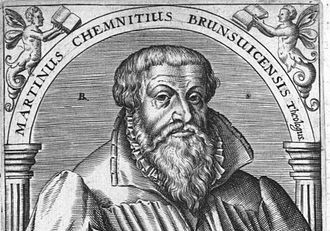
    The following is my translation of Martin Chemnitz’s homily outline for the First Sunday after Easter (Dominica Quasimodogeniti) found in his Postilla (Vol. II, pgs. 89–90). Chemnitz’s text is John 20:19–31. Square brackets indicate my own personal notes.

    Chemnitz’s Homily Outline

    “Now in order that we may handle this doctrine in a useful manner, so we will set it forth in these points:

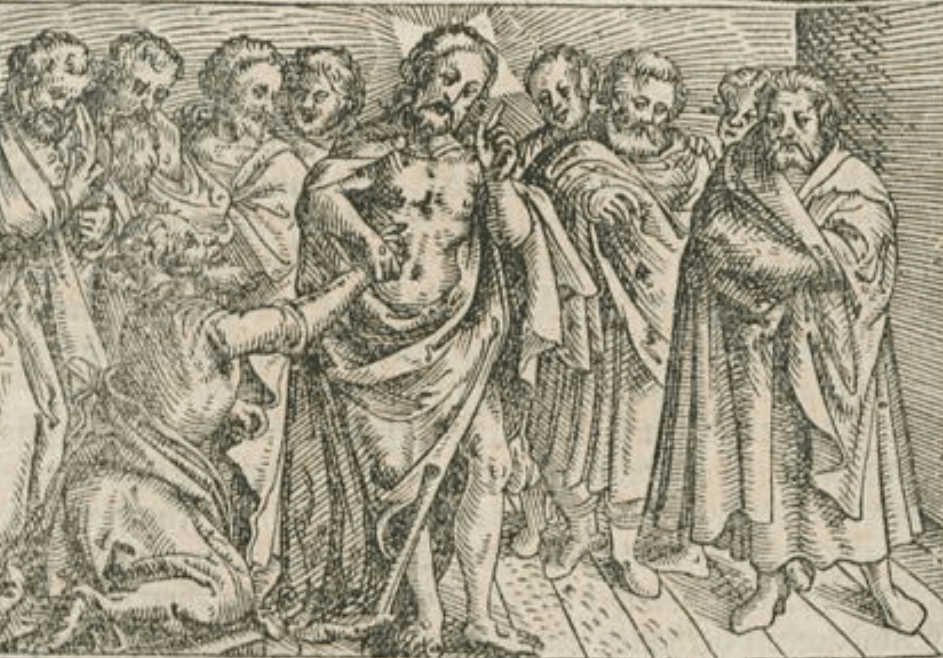
    1. First, here is described, because the Lord Christ had previously declared that He had to suffer and die and rise again, in order that He institute the preaching office (Predigamt) on earth: How He has instituted the preaching office (Predigamt), and how preachers and hearers ought to thereby be reminded how the preaching office must and ought to be carried out, that thereby everything happens in the name of Christ and in the stead of Christ (in Namen Christi… und an Christi statt), and what He gives to preachers and to hearers as a reminder (Erinnerung) and for doctrine (Lehre).
    2. Second, how the Lord did not only institute the preaching office (Predigampt) in general (ins gemein), but rather directed it that it ought to be carried out that it be (seien) the keys of the kingdom of heaven, by which the unrepentant are to have heaven closed to them and the repentant are to have heaven opened and unlocked to them. And how the preacher ought to carry out and use these keys. Also, what the hearers ought to think of the keys, how they ought to use the loosing key for consolation (Trost), but ought to use the binding key for warning (Warnung), and how they ought not think, ‘Why do I care whether heaven is being barred only by the preacher? What power (Macht) does he have?’ But rather we ought to consider what the Lord says here: that what the preacher does here is valid in heaven with our Lord God and is effective there [John 20:23].1
    3. Third, how no man of high or low station (Standts), ought to presume to hinder God in this order and not allow the preaching office (Predigamt) to take its course both in its teaching office (Lehrampt) as well as in its rebuking office (Straffampt).2 Because God wants to maintain this order (Ordnung), and thereby be efficacious and through this means allow His treasury to be opened so that from it all the treasures of God—which are God’s, which the Son of God has acquired and earned for us through His obedience, suffering, and death—may be brought forth and be distributed among us. And how, the devil therefore sets himself so opposed to this office (Ampt), and especially the rebuking office (Straffampt). Therefore, all Christians, preachers, political authorities, and hearers ought all the more strongly to uphold it, that this office may be carried out unhindered among them.

    We will now deal with these three points briefly in this sermon. To this end, the blessed God give us His Holy Spirit, that we may hear and learn fruitfully.”

    Footnotes:

    1. The reader should remember and consider the Small Catechism’s explanation of the Office of the Keys: “The Office of the Keys is that special authority which Christ has given to His church on earth to forgive the sins of repentant sinners, but to withhold forgiveness from the unrepentant as long as they do not repent.” ↩︎
    2. The rebuking office (Straffampt) is typically dealt with more explicitly on the Fifth Sunday after Easter because of John 16:8, “And when the Paraclete comes, He will convict/rebuke the world of sin, and of righteousness, and of judgment.” See Chemnitz, Postilla, Vol II. pgs. 166ff. See also Johann Gerhard, Theological Commonplaces, Vol. XXVI/2, § 270. ↩︎