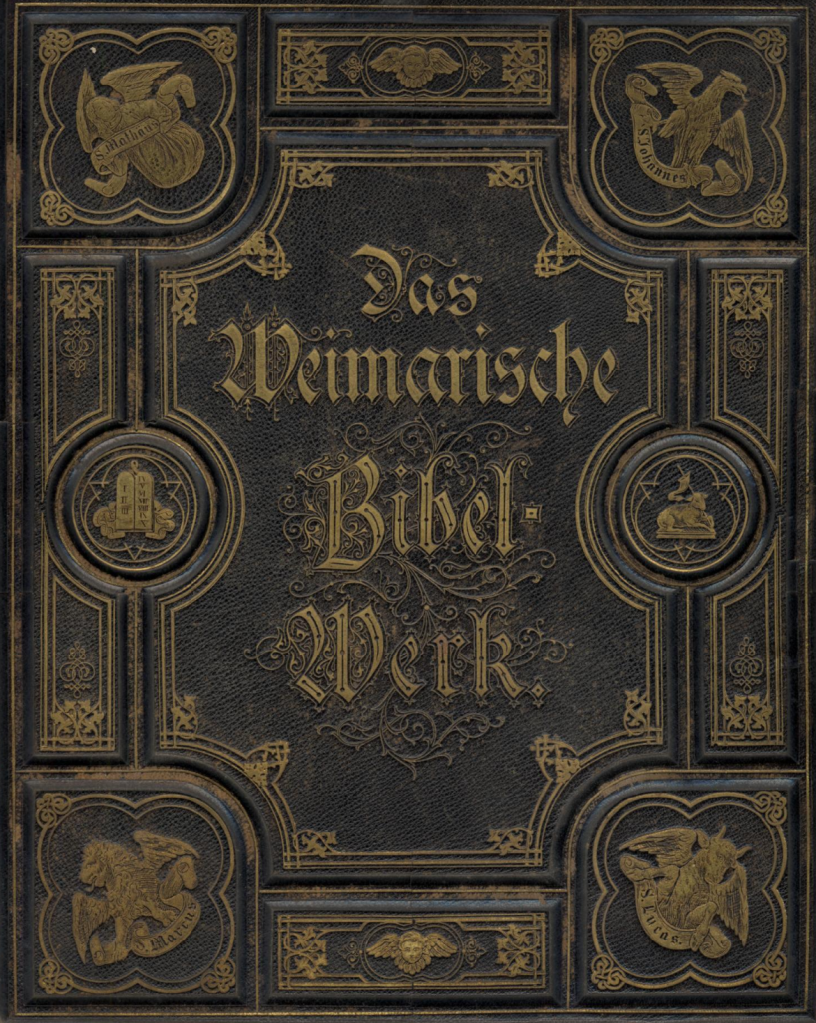
The following is my translation of the notes and useful applications for the Epistle Reading of the Sixth Sunday after Trinity, Romans 6:1–11, as they are found in Das Weimarische Bibelwerk (1877). Square brackets indicate my own notes and additions. For the useful applications, I recommend the reader see this very helpful article by Dr. Benjamin T. G. Mayes.
I. An answer to the objection as though this doctrine of justification by faith gives a reason to sin. (v. 1–11)
Annotated Text
1. What shall we1 say to this? (Namely, to that which the godless deduce and conclude from what is said in Romans 5:20) * Ought we then to persist in sin (and continue wantonly), so that grace be all the more powerful? (So that God might have an occasion to pour out His grace and mercy all the more richly upon us?)
1 Greek: “now” (since we are assured of so rich a grace). [The Greek text has οὖν, literally, “therefore.”]
* Galatians 2:17
2. May that be far (from us, that we should say or think such, much less that we do such! For) How should we1 want to live in sin, we2 who have died to it? (In a spiritual manner, that it has just as little right over us as over a dead man, and that accordingly we ought noy allow sin to live, work, and rule in us.)
1 Greek: “still further”
2 Greek: “we as those who”
* Galatians 6:14 (1 Peter 2:24)
3. Do you * not know1, that all who of us2 who have been baptized in (and upon) Jesus Christ (and were incorporated into Him in a spiritual manner) were baptized into His death? (So that we become partakers of the power of His death in no other way than if we ourselves were already dead to sins. Through such power of the death Christ, not only were our sins forgiven us, but we also received the Holy Spirit, who curbs and puts sin to death in us. Luther: “We are baptized into Christ’s death so that we die as He did; for we do not die completely to sin unless the flesh also dies bodily.”)
* Galatians 3:27; Colossians 2:12 (2 Corinthians 4:11)
1 Greek: “or” [ἢ]
2 Greek: “as many of us” [ὅσοι]
4. Therefore, we were each * buried with Him (in a spiritual manner) through Baptism into death so that just as Christ was raised from the dead through the glory of the Father (through the glorious power of God, which He allowed to be seen in the resurrection of Christ), † in this way we also ought to walk in a new life (henceforth lead a new life and no longer a sinful life. The holy apostle is referring to the practice that was used in the first apostolic Church, that those who were baptized were completely immersed under the water and thus, as it were, buried, and afterward were drawn out again of the water, and thus, as it were, raised again, to indicate, that they had become partakers of the power of the death and resurrection of Christ, and that they ought to die to sin, but on the other hand, walk in new holy life).
* Romans 8:10
† Ephesians 4:23; Colossians 3:8ff.; 1 Peter 2:1, 4:1–2; Hebrews 12:1 (Colossians 2:12)
5. Therefore, we were planted together with Him to a similar death (that through Baptism we are planted into Him in such way that we are like Him in death, because we died to sin, Romans 6:2), so we will also be1 [planted with Him] (our beloved Savior) [in] * the resurrection.
* 2 Timothy 2:11f. (John 15:5; Colossians 3:1ff.)
1 Greek: “For if we are planted together with him (as it were, grafted into Him [σύμφυτοι]) according to the likeness of His death (that its power is reckoned and imparted to us), so it follows that we also ought to be planted together with Him in the likeness of His resurrection (and its power show itself in us).”
6. Because we know, that our old man (our sinful flesh with its lusts and cravings) was crucified together with Him * (curbed, put to death, and made nothing; consequently its power to condemn us and to rule in us has been taken away through Christ’s suffering and death), so that the sinful body (the body of sin, the inherited sin, which poisons us in body and soul, and itself rules in all members) might cease (become powerless and no longer have reign [over us]), that we henceforth not serve sin.
* Galatians 5:24 (Colossians 3:5)
7. For whoever has died (has died in a spiritual manner to sin, Romans 6:2, and has rendered satisfaction to righteousness through one’s own or another’s death reckoned to him), he has been justified (made free and exonerated) from sin (that inherited sin and also his committed sins are no longer reckoned to him, so that sin also can no longer have dominion over him).
8. Now if we have died (died to sin) with Christ (in a spiritual manner), so we believe that we also will live (in a new and spiritual manner) with him (because we have been raised by Him to a spiritual life).
(Romans 8:17; Galatians 5:24, 2:20)
9. And we know that Christ, being raised from the dead, * henceforth does not die (but rather remains in the new heavenly life always and eternally, into which He entered through the resurrection); death henceforth does not rule over Him (as also previously death did not rule over Him, because He died not under compulsion, but rather willingly).
10. For in that He died, He died to sin * once for all (so that with His single sacrifice He might make full atonement for the sin of the entire world, which He had taken upon Himself, and also that He might abolish it and destroy it, Hebrews 9:26); but in that He (now)† lives (in highest and heavenly joy), He lives to God (with God, His heavenly Father, and to the honor of God the Father, Philippians 2:11).
* Hebrews 9:28
† Isaiah 53:10 (Hebrews 7:16)
11. In this way, you also consider yourselves, that you (with Christ) are dead to sin (and therefore you should no longer have any fellowship with it), and alive to God in Christ Jesus, our Lord (in whom you now ought to lead a new heavenly life before God, not only for a time, but rather continually, in spiritual joy which comes from a clear conscience and irreproachable conduct).
(Galatians 2:19; Colossians 3:3)
Useful Applications
I. CORRECTION: The doctrine of justification and salvation which comes by grace only through faith in Christ ought not tempt us to sin, as though grace thereby would become all the more powerful, rather, it ought to restrain us from sin, because in Baptism we have renounced sin and, so to speak, have died with Christ so that as Christ was raised from the dead, so also we ought to walk in a new life. (v. 1–4)


 PATTERN OF SOUND WORDS