Tag: Trinity 12

  • Martin Chemnitz’s Sermon for the Twelfth Sunday after Trinity

    Martin Chemnitz’s Sermon for the Twelfth Sunday after Trinity

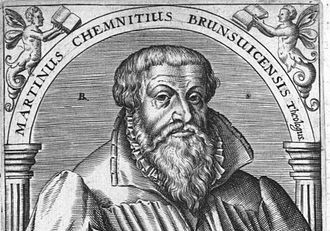
    The following is my translation of Martin Chemnitz’s sermon for the Twelfth Sunday after Trinity as found in his Postilla (Vol. II, pgs. 429–434). Chemnitz uses a composite text based off of Matthew 15:29–31 and Mark 7:31–37. Curly brackets indicate marginal notes present in the original text. Square brackets indicate my own notes and additions. I have broken up some of the longer paragraphs for the sake of readability.

    Composite Gospel Text (Matthew 15[:29–31]; Mark 7[:31–37])

    And when Jesus went out again from the region of Tyre and Sidon, He went on further from there and came to the Galilean Sea, in the midst of the region of the Decapolis, and He went up on a mountain and sat down there. And there came to Him many people, having with themselves the lame, the blind, the mute, the crippled, and many others, and they cast them at the feat of Jesus, and He healed them so that the people marveled when they saw that the mute speaking, the crippled were healed, the lame walking, the blind seeing, and they praised the God of Israel.

    And they brought to him a deaf man who was mute, and they asked Him that He lay hands on him, and He took him aside from the people, placed His finger in his ear and spit, and touched his tongue, and He looked up to heaven, groaned, and said, “Ephphatha,” that is, “Be thou opened.” And immediately his ears were opened, and the bond of his tongue was loosed, and he spoke right. And He forbid them that they should tell no one. But the more He forbid them, the more they spread it, and they marveled beyond measure and said, “He has made all well, He makes the deaf hear and the speechless speak.”

    Explanation of the Gospel

    {Ordering of the Doctrine in the Sunday Gospels}

    If one pays attention diligently to the order of the Sunday Gospels, then one has from it a beautiful reminder (Erinnerung). We have previously heard how God punishes those who despise His Word, and how one should guard against such punishment so that he makes the temple of God to a house of prayer (Bethauß). It is also reported how one can make it into a house of prayer in the Law, in the article of justification or the Gospel, and in prayer according to the example of the tax collector [Luke 18:9–14]. Thereupon it follows that we do not have such from our own powers, but rather, with respect to this, we are deaf, mute, and blind.

    {Summary of the Doctrine of this Gospel}

    Before the Fall, we were thus created so that we made the temple a house of prayer in the Law, the Gospel, and the doctrine of prayer, so that when God saw everything that He had made, it was not only good, but very good [Genesis 1:31], especially the rational creatures, angels, and men. However, many of the angels have fallen; also, the serpent deceived mankind and thus sin came into the world and everything became wicked so that we are now deaf and blind by nature. But God had compassion on us and sent His Son, who has now brought again into right what was corrupted in Adam through Satan, and has thereby healed us, that He makes healthy our external members where we understand it most easily; likewise, He thereby heals our inner wound and evil from which we cannot rescue ourselves, as we are “children of wrath” (Ephesians 2[:3]) and our ears are deaf, our eyes are blind, are are tongue is bound, but God alone rescues and helps. And finally, that He thereby frees us from eternal punishment. Thus, He has made all things good [Mark 7:37], and He still does it, says Mark, and for this He uses lowly means: He speaks a word, He spits, He places His finger in the ears, etc. Then, one might think that the ears should well be stopped much more, and the eyes become darker! But when Christ uses such despised means, whereby the Word of God and the most worthy Sacraments are signified, He thereby helps and makes all things good, so that the temple among us becomes a house of prayer, and God may thus graciously turn away the well-deserved punishment. These we do not want to deal with at great length now, but rather only want to pay attention to what this Gospel teaches us for comfort under the cross (zum Trost im Creutz).

    {Division of the Sermon}

    Now there are here three kinds of people: [1] the Gergesenes [i.e., the crowd], [2] the mute man, [3] and the Lord Christ, and thus there are also three kinds of doctrine under the cross which we thus want to make use of and that we want to take away from this lesson.

    1. First, what we ought to do and think when God lays a cross upon other people.
    2. Second, how we ought to conduct ourselves when we ourselves come under the cross.
    3. Third, what the Lord Christ does here, and what we have to comfort ourselves in Him.

    First Part

    Forthcoming at a later time.

    Second Part

    Forthcoming at a later time.

    Third Part

    Forthcoming at a later time.

  • Notes and Useful Applications for 2 Corinthians 3:4–11 from Das Weimarische Bibelwerk (1877)

    The following is my translation of the notes and useful applications of the Epistle Reading for the Twelfth Sunday after Trinity, 2 Corinthians 3:4–11, as they are found in Das Weimarische Bibelwerk (1877). Square brackets indicate my own notes and additions. For the useful applications, I recommend the reader see this very helpful article by Dr. Benjamin T. G. Mayes.

    2. A report as to whence the working [of the Preaching Office] comes. (v. 4–6)

    4. But we have such a trust * through Christ to God (Luther: “that we have prepared you for the letter,” and that our Preaching Office is effective for the conversion of many people).

    * Compare John 14:6ff.

    5. Not * that we are sufficient of ourselves to think (much less to do or to think) something (good, which is for the promotion of our salvation or the salvation of other people) as from ourselves (from human powers), but rather, that we are sufficient, is (solely and only) from God.

    * Compare 2 Corinthians 2:16; Philippians 2:13.

    6. Who also has made us sufficient, to carry out the Office of the New Testament (which is an Office), not (primarily) of the letter (of the Law, which with letters was written on stone tablets, and prescribed a completely perfect obedience, which alone is not able to give grace to sinners, nor the power to such obedience), but rather of the Spirit (of the Gospel, through which the Holy Spirit works faith in the hearts of men, and is given to the faithful. Luther: “to teach the letter is to teach merely the Law and works without the knowledge of the grace of God, by which everything that man is and does is condemned and is recognized as guilty of death, for without God’s grace he can do nothing good. To teach the Spirit is to teach grace without Law and merit, by which man is made living and is saved.”). For the letter (of the Law) kills (because it gives man knowledge of his sins, Romans 3:20; it accuses man and convicts him in his heart that he is guilty of eternal death, Romans 4:15.), but * the Spirit (the Gospel) makes alive (it draws man out again from such terror of death because it directs him to Christ, the Mediator, who is the end of the Law, Romans 10:4.).

    * Compare John 6:63; 2 Corinthians 5:18; Romans 7:6, 10–11; 2 Corinthians 5:20ff.; Galatians 3:10ff.

    3. How the Law and the Gospel are to be held against one another, and how the Gospel is to be greatly esteemed compared to the Law. (v. 7–11)

    7. But the office (of the Law in the Old Testament), that through the letter kills (v. 6) and in the stone is formed (written) **, has glory (is preached with a particular clarity, as when God glorified Moses before the people when he brought down the tablets of the Law the second time), in such a way that the children of Israel could not (properly and precisely) look * upon the appearance of Moses on account of the glory of His appearance, it nevertheless ceased (for when Moses died, this glory had ceased).

    * See Exodus 34:30.

    ** Greek: graven –

    8. How shall not much more the office (of the Gospel in the New Testament), that gives the * Spirit **, (which the Word of the Gospel writes in the heart, a particular) glory have? (which was proved in the miracles of Christ and His Apostles, as well as in the bodily glory of the appearance of Christ, which He allowed to be seen at His Transfiguration, which glory remains into eternity, and then in the powerful working of the Gospel, through which the hearts of men are enlightened.)

    * See Galatians 3:14; Galatians 3:2ff.

    ** Greek: the office of the Spirit

    9. For as the office that preached condemnation (which convicted men through the Law, that they merit condemnation), had glory; * much more does the office ** which preaches righteousness (which teaches men how they can and ought to be come righteous and be saved through Christ), have a surpassing glory.

    * Greek: is glorious (that is, brings with itself and works [glory])

    ** See Romans 1:17; cf. 2 Corinthians 3:21; John 5:45.

    10. For even that part (the office of the Old Testament), which was glorified (because the Law was given with great glory on Mount Sinai, and Moses, with a shining appearance, presented it to the people of Israel), is no to be considered glorious compared to this surpassing glory. *

    * Greek: For in so far as it was honored with glory (the office of the Law), it is not even worthy that one call it (radiance or) glory, (in view of and) compared to this surpassing glory.

    11. For if that has glory which ceases (since the Old Testament is abolished by the New Testament and believers are redeemed from the curse and coercion of the Law), much more will that have glory * which remains (because the New Testament will remain until the Last Day, and the benefits which have been distributed to us through the Gospel in the New Testament will extend to eternal life).

    (See Hebrews 12:27ff.)

    * Greek: be in glory (and constantly keep it).

  • Notes and Useful Applications for Mark 7:31–37 from Das Weimarische Bibelwerk (1877)

    The following is my translation of the notes and useful applications of the Holy Gospel for the Twelfth Sunday after Trinity, Mark 7:31–37, as they are found in Das Weimarische Bibelwerk (1877). Square brackets indicate my own notes and additions. For the useful applications, I recommend the reader see this very helpful article by Dr. Benjamin T. G. Mayes.

    III. A deaf man, who was mute. (v. 31–37)

    31. And when He had departed again from region of Tyre and Sidon, He came to the * Galilean Sea, in the midst of the region of the Decapolis.

    * Compare Matthew 15:29f.

    Greek: And when He went back from the region of Tyre and Sidon, He came again to the Galilean Sea through the –

    32. And * they brought to Him a deaf man, who was mute (the one who spoke evil, whom the devil through God’s appointment had almost completely robbed of hearing and speech) and they asked Him that He lay hands on him (and give him his hearing and speech again).

    * Compare Matthew 9:32; Luke 11:14.

    No possession is thought of here. What is written in Matthew 9:32 is a different history.

    33. And He took him aside from the people, and placed His finger in His ear, and * He spat, and touched (with His spit) his tongue (to show that His flesh, through the personal union, is endowed with the power to do miracles, as well as to make health and living).

    * Compare Mark 8:23; John 9;6.

    34. And * He looked up to heaven, sighed (over the miserable condition of the human race) and said to him: “Ephphatha,” that is, “Be thou opened.”

    * Compare John 11:41.

    35. And immediately his ears his ears were opened, and the bond of his tongue was loosed, and he spoke right.

    36. And He forbid them that they should tell no one. (The cause of such prohibition is told in Matthew 8:4) But the more He forbid them, the more they spread it.

    37. And they were astonished beyond measure and said, * “He has made all well (in this miracle and in His entire way of life); He makes the deaf to hear, and the speechless to speak.

    * Compare Genesis 1:31.

    Greek: Also – (For they had not yet seen the like, even they they had seen other miracles.)

    Useful Applications

    III. COMFORT: That Christ the Lord makes all well and good, everything that was corrupted in us by the devil, as the people praise Him, v. 37; DOCTRINE and COMFORT: That also our wretched body shall partake of this [blessing], if the heart remains steadfast in Him, v. 33–37.

  • Notes and Useful Applications for Isaiah 29:17–24 from Das Weimarische Bibelwerk (1877)

    The following is my translation of the notes and useful applications of the Old Testament Reading for the Twelfth Sunday after Trinity, Isaiah 29:16–24, as they are found in Das Weimarische Bibelwerk (1877). Square brackets indicate my own notes and additions. For the useful applications, I recommend the reader see this very helpful article by Dr. Benjamin T. G. Mayes.

    IV. The Call of the Gentiles (Isaiah 29:17–24)

    17. Now, is it not a little while until Lebanon should become a [fruitful] field , and the field be reckoned as a forest?

    Compare Isaiah 32:15.

    By “Lebanon” the Jews are understood, as Luther says, “because the city of Jerusalem was built from Lebanon.” Their ancestors were a beautiful fruitful field at the time of the Old Testament, as Lebanon; however, they had become as a cut down forest and an unfruitful field in the New Testament because of their repudiation of the Gospel. However, on the other hand, by the field the Gentiles are to be understood, who previously, in the time of the Old Testament, were an unfruitful field; however, in the New Testament, they have become a beautiful fruitful field, that is, through Christ they have been enlightened, converted, and made fruitful unto good works.

    The prophetic way of speaking often compares the heathen with Lebanon (see Song of Songs 4:8; Isaiah 60:13), according to which, the reception of the Gentiles and the rejection of the Jews from the Church would here be described (see 18f.).

    18. For at that time the deaf (the Gentiles, who are spiritual deaf) shall hear the words of the book (of the Gospel, see v. 11) and the eyes of the blind (those who are spiritually blind) will see out of the darkness and gloom (they will be enlightened by the Holy Spirit, and will know rightly God in Christ from the Word of the Gospel).

    Compare Isaiah 35:5; 42:7; 60:1; Ephesians 3:9.

    19. And the wretched will once again have joy in the Lord, and the poor among men will be happy in the Holy One (in) Israel (the poor will have the Gospel preached to their comfort and joy of the heart, Matthew 11:5).

    Compare Isaiah 61:1ff; 51:3, 11; Psalm 22:27.

    Hebrew: Joy over strangers.

    20. When the tyrant has an end, and the scoffers are extinguished, and all who watch to cause trouble (Luther: “false doctrine and works”) are destroyed .

    Compare Isaiah 9:4ff.; Psalm 110:2, 5; Zephaniah 3:18.

    21. Who make the people sin through preaching (those who preach only human trifles, or who flatter their hearers, and make cushions for them under their arms and pillows for their heads, Isaiah 13:18) and hunt the one who rebukes them in the gate (publicly and without fear), who turn aside from righteousness by lies (they turn themselves away from the truth by lies, and from unrighteousness by injustice).

    See Matthew 15:3ff.; Amos 5:10.

    Hebrew: through (the oral forthplanted) Word.

    Hebrew: they entice the righteous man (thereby seducing him from good to evil) through vain things (human ordinances).

    22. Therefore, says the Lord, the one who has redeemed Abraham (and led him out out of the idolatrous Ur in Chaldea, Genesis 11:31, 12:1), to the house of Jacob (those according to the Spirit) thus: “Jacob shall no more be disgraced, and his countenance shall no more be ashamed (nor will it become pale when they are converted and steadfastly believe in Christ).

    Compare Isaiah 41:8ff.; Genesis 48:16.

    Hebrew: Now (or from now on).

    Hebrew: Now no more.

    23. For when they see their children, the work of my hands (those I have given rebirth to by water and the Spirit, John 3:5) among them, they will hallow My name, and they will fear (Me) the Holy One in Jacob and (Me) the God of Israel.

    Compare Isaiah 42:21ff.; Psalm 100:3; 2 Corinthians 9:2; 1 Thessalonians 1:7ff.

    Hebrew: at those who press with power (frequently), Matthew 11:12.

    24. For those who had who had an erring spirit, will receive understanding, and those who complain (Luther: “the useless chatterers, such as the enthusiasts who boast of a vain spirit” ) will allow themselves to be taught (although they indeed had previously sharply fought for their errors).

    Compare Acts 9:5ff.; 2 Corinthians 10:15.

    Hebrew: the rebellious murmurers, see John 6:52, 61; Acts 17:32; 1 Corinthians 1:24ff.

    Useful Applications

    IV. Doctrine/Teaching: That through the Word of the Gospel, those men who receive it in faith will be graced, quickened, and made joyful, v. 18–19; Doctrine/Teaching: That on the other hand, the despising of the [Gospel] causes the judgement of blindness, v. 10ff.; Comfort: That God will hold His Christian people in grace, if they only faithfully abide by and with His Word, v. 22f.